OUTSOURCING ARTICLES
-
 Is mRNA Manufacturing Overbuilt?
mRNA pipelines continue to advance, but has provider growth outpaced the pipeline? Let's take a closer look.
-
 What Oligo Manufacturing Risks Are We Underestimating?
Earlier this year, I attended the OPT Congress, where I had the great fortune of meeting consultant Marc Lemaitre. I recently sat down with Lemaitre for a follow-up interview to gauge some of the evolutions he’s been watching within the CMC landscape for oligo development. Here, he digs into the shifts in quality he’s noted, pointing out some of the potential pitfalls we may encounter in our manufacturing that could stand to impact the overall quality of our oligos.
-
") Bridging The Atlantic: A European Executive's Guide To Building A Successful U.S. RNA Business (Pt. 2)
Bridging The Atlantic: A European Executive's Guide To Building A Successful U.S. RNA Business (Pt. 2)European RNA biotech leaders can accelerate U.S. success by aligning fundraising, partnerships, manufacturing, hiring, and regulatory strategy from day one.
-
 The Delivery Challenge For In Vivo Cell Engineering
As RNA therapies expand beyond the liver, delivery—not payload design—has become the defining challenge for precise, scalable in vivo cell engineering.
-
 Soliman Says… 5 Questions Every RNA Platform Must Answer Before Investors Write The Check
A practical framework for evaluating whether an RNA company has the science, strategy, scalability, and discipline to become a lasting platform.
-
") Bridging The Atlantic: A European Executive's Guide To Entering The U.S. RNA Market (Pt. 1)
Bridging The Atlantic: A European Executive's Guide To Entering The U.S. RNA Market (Pt. 1)A practical roadmap for European biotech leaders navigating FDA expectations, market entry, and the strategic decisions that shape U.S. expansion.






OUTSOURCING VIDEOS

While the speed of production and flexibility of mRNA are appealing, several industry challenges must still be addressed to realize the full potential and further expand its use.

In part two of this webinar series, presenters focus on avoiding potential risks, such as unexpected budget changes and unplanned change orders, that could jeopardize the success of a clinical trial.
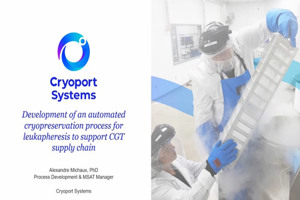
Explore how IntegriCell™ delivers high-quality, manufacture-ready cryopreserved leukopaks, vital for consistent and reliable cell therapy production.
Max De Long, April Sena, and Venkat Krishnamurthy share their perspectives on the current “health” of CDMO SPOS and enzymatic ligation platforms, while also highlighting the “red flags” to look out for when taking stock of a CDMOs capabilities.
ARTICLES, APP NOTES, CASE STUDIES, & WHITE PAPERS
-

Development of RNA-based therapies sits at the cutting edge of vaccine and oncology innovation, in addition to holding promise in dozens of other therapeutic areas.
-

Explore innovative solutions for CDMO's striving to remain competitive as the biopharmaceutical market grows and evolves.
-

Bioanalysis service quality significantly impacts project success. Don't settle for typical CRO claims; demand better technology, pricing transparency, and dedicated partnership.
-

Learn about the first end-to-end cGMP facility that was developed for mRNA manufacturing to address the shortage of CDMOs and the inadequate and inefficient supply chain options for sourcing GMP mRNA.
-

What sustainable manufacturing processes best address Oligonucleotide environmental impact while maintaining scalability?
-

We offer comprehensive analytical support across the R&D space, including method development, validation, process characterization, in-process testing, process validation, and GMP release testing.
-

Selecting the right Contract Research Organization (CRO) is critical for the success of a clinical trial. This article outlines essential factors to consider during the selection process.