CLINICAL TRIALS ARTICLES
-
 The In Vivo CAR-T Playbook: Differentiating Your mRNA Candidates
Fortunately, as my conversation with ParcelBio CEO David Weinberg emphasized, there’s still a lot of room to grow in terms of what our RNA-based products can be and how they can perform. Here in part 2 of this two-part article, Weinberg walks me through how ParcelBio is approaching this market and helping define what a competitive mRNA product will look like in the in vivo CAR-T space.
-
 Inside the In Vivo CAR-T Boom: Where Does mRNA Fit In?
I had the chance to sit down with ParcelBio’s CEO David Weinberg to learn more about the emerging market dynamics in the in vivo CAR-T space, with a particular focus on the challenges facing RNA biotechs looking to navigate this up-and-coming therapeutic class.
-
 What Baby KJ Taught Us About Patient & Physician Communication
Over the past few weeks, I’ve been sharing my takeaways from the overall event, as well as from a specific panel featuring JHU’s Jeff Coller, CHOP’s Rebecca Ahrens-Nicklas, and Plowshare Therapies’ Kevin Strauss. Together, these three discussed the biggest learnings and takeaways from the miraculous Baby KJ experience that we very much hope to replicate in the future. As you can likely imagine, patient and physician communication played a large role in the discussion at hand.
-
 What Baby KJ Taught Us About mRNA COGS
Here, in part 2 of this three-part series, I share a few details that came to light about the COGS behind Baby KJ’s therapy production. Obviously, we know why it’s important to keep these figures in mind as we move forward; but I particularly liked Strauss’ reminder that it’s our job to “think systematically about how we’re going to create a safety net of sustainable, accessible product that can be widely distributed at an affordable cost.”
-
 What Baby KJ Taught Us About Sustainable mRNA Development
Of course, these conversations are rarely simple, and the learnings are multifaceted. In the following three-part series, I’ll share my 3 biggest takeaways from the discussion between Coller, Ahrens-Nicklas, and Strauss. Here in part 1, I’ll start by parsing out the learnings about drug development we can take away from the overall heroic efforts to dose Baby KJ.
-
 From Baby KJ To Global Access: The 3 Pillars Of Next-Gen mRNA Expansion
Obviously, the transition from RNA vaccines to therapeutics is an “expansion” all on its own; but to do this successfully, we need to expand our science, our products’ deliverability, and our patient access. In the following article, I highlight a few of the best practices and/or innovations that came up in conversation during this event that will play a significant role in helping us expand mRNA’s reach, both scientifically and therapeutically.






CLINICAL TRIALS VIDEOS
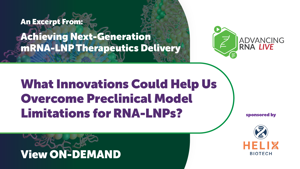
In this Advancing RNA Live clip, BioNTech’s Ben Muir and Hopewell Therapeutics’ Kate Zhang share their perspectives on the most exciting novel screening methods, innovative preclinical models, and next-gen technologies they hope can/will eventually help us bridge the translation gap between preclinical models and the clinic.

In part two of this webinar series, presenters focus on avoiding potential risks, such as unexpected budget changes and unplanned change orders, that could jeopardize the success of a clinical trial.

Hosted by Cell & Gene Collaborative's Director Anna Rose Welch, ARW on RNA puts a creative spin on the emerging mRNA + RNA therapeutics industry. Here, in Episode 4, Welch explores the parallels that exist between the oft-overlooked history of Michelangelo's David and the mRNA therapeutics sector's own R&D history, as well as where the mRNA space hopes to move in the future.

The Advancing RNA Live panelists share several inconsistencies they’ve encountered working with global regulators, as well as on which aspects they’re seeing regulatory agencies applying greater scrutiny in mRNA development today.
ARTICLES, APP NOTES, CASE STUDIES, & WHITE PAPERS
-

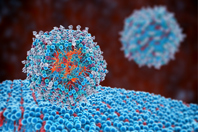
Lipids that shift charge with pH can be chosen to fit the application and delivery route. Varied pKa and biodegradability give developers room to match each therapeutic target.
-

Decoupling metadata from core content creates agile workflows, enabling seamless asset reuse across global channels while maintaining technical precision.
-

Early research choices shape outcomes. Focusing on reproducibility, scalability, regulatory fit, and supply stability early cuts risk, prevents delays, and supports smoother development progress.
-

Discover how the right PCR strategy, combined with thoughtful assay design and validation, can strengthen confidence in your molecular research and clinical testing workflows.
-

Opaque pricing slows decisions and erodes trust. Transparency clarifies cost drivers, improves budgeting, enables confident sourcing, and strengthens long-term R&D partnerships.
-

Choosing a CRO requires more than proposals. Assess reliability, automation, GLP rigor, scientific engagement, pricing clarity, and capacity to find partners who deliver defensible data on real timelines.
-

GLP compliance isn’t binary. Real defensibility depends on rigorous QA, validated electronic systems, and operational maturity — not just a label.