
Scaling RNA Therapeutics: Purification, LNP Formulation, And GMP Manufacturing (Pt. 2)
By Robert Dream, HDR Company LLC
The rapid expansion of RNA therapeutics has created a new generation of industrial manufacturing challenges that extend far beyond the in vitro transcription reaction itself. While upstream RNA synthesis often receives the greatest attention, the downstream stages of purification, formulation, and GMP production infrastructure ultimately determine whether an RNA therapeutic can achieve commercial-scale success.
As the RNA sector matures, manufacturers are increasingly focused on industrialization: the ability to consistently produce large quantities of highly pure, stable, and clinically effective RNA therapeutics under tightly controlled regulatory conditions.
This transition has elevated purification systems, lipid nanoparticle (LNP) formulation technologies, and modular GMP manufacturing facilities into strategic differentiators across the industry.
Why Purification Became A Critical Bottleneck
Purification remains one of the most technically demanding stages of RNA manufacturing.
The IVT reaction generates not only the desired RNA transcript but also a wide range of process-related impurities, including:
- double-stranded RNA (dsRNA)
- abortive transcripts
- residual DNA template
- residual enzymes
- free nucleotides
- aggregated RNA species.
Among these impurities, dsRNA has emerged as one of the most significant quality concerns. Even relatively small amounts of dsRNA can activate innate immune pathways and reduce therapeutic tolerability. As a result, downstream purification has become central to both product quality and regulatory compliance.
The dsRNA Challenge
Double-stranded RNA contaminants are generated unintentionally during IVT reactions and can strongly activate pattern-recognition receptors involved in innate immunity.
This immune activation may:
- reduce translation efficiency
- increase reactogenicity
- trigger inflammatory signaling
- limit therapeutic performance.
Because of this, modern RNA manufacturing workflows require highly effective purification strategies capable of removing dsRNA while preserving intact single-stranded RNA. The challenge becomes even greater at commercial scale, where purification systems must maintain consistency across large production batches.
Chromatography Technologies
Advanced chromatographic methods now serve as the backbone of RNA purification.
Ion Exchange Chromatography
Ion exchange systems separate molecules base.d on charge interactions and are widely used for removing nucleic acid contaminants and residual process materials. These systems are particularly valuable because RNA molecules possess strong charge characteristics that can be manipulated under carefully controlled buffer conditions.
Reverse-Phase HPLC
Reverse-phase high-performance liquid chromatography (RP-HPLC) enables high-resolution separation of RNA species according to hydrophobic interactions.
RP-HPLC has proven highly effective for removing dsRNA contaminants and truncated transcripts.
Affinity Chromatography
Affinity-based purification systems use selective ligands to capture either the target RNA or specific impurities. These methods continue to evolve as manufacturers seek more selective and scalable purification platforms.
Tangential Flow Filtration (TFF)
Tangential flow filtration has become one of the most important unit operations in large-scale RNA manufacturing.
TFF systems are widely used for:
- buffer exchange
- product concentration
- diafiltration
- removal of small molecular impurities.
Unlike traditional dead-end filtration systems, TFF minimizes shear stress and reduces membrane fouling by allowing material to flow tangentially across the filter surface. This improves scalability while helping preserve RNA integrity. TFF also integrates effectively into continuous manufacturing workflows, making it increasingly important as the industry moves toward automated production systems.
Magnetic Bead Purification And Continuous Processing
Emerging purification strategies are increasingly focused on automation and continuous manufacturing. Magnetic bead systems represent one of the most promising developments in this area.
These technologies use functionalized magnetic particles that selectively bind RNA or contaminants, enabling rapid separation through magnetic fields rather than traditional columns.
Potential advantages include:
- simplified automation
- reduced process complexity
- continuous processing compatibility
- improved scalability
- faster turnaround times.
The growing interest in magnetic bead purification reflects a broader industry shift toward flexible and modular RNA manufacturing architectures.
Lipid Nanoparticles: The Delivery Engine
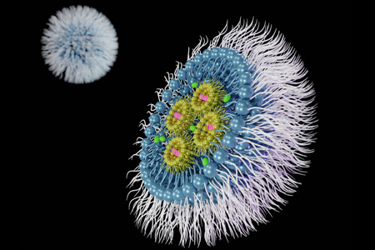
RNA molecules are inherently fragile and highly susceptible to enzymatic degradation. Most therapeutic RNAs therefore require encapsulation within lipid nanoparticles. LNPs protect RNA cargo during circulation while enabling intracellular delivery.
Modern LNP systems typically contain four major components:
- ionizable lipids
- cholesterol
- PEGylated lipids
- hospholipids.
Each component plays a distinct role in nanoparticle stability, biodistribution, and cellular uptake. Ionizable lipids are particularly important because they become positively charged under acidic conditions, allowing them to complex efficiently with negatively charged RNA molecules.

Microfluidic Mixing
Most industrial LNP systems are produced through rapid microfluidic mixing. In this process, an ethanolic lipid phase and an aqueous RNA phase are combined under tightly controlled flow conditions. This induces spontaneous self-assembly of nanoparticles.
Microfluidic systems allow manufacturers to precisely control:
- particle size
- polydispersity
- encapsulation efficiency
- reproducibility.
These parameters strongly influence therapeutic efficacy, biodistribution, and safety. The large-scale deployment of mRNA COVID-19 vaccines demonstrated that microfluidic LNP manufacturing could be successfully scaled to global production volumes.
Critical Quality Attributes
RNA-LNP therapeutics require rigorous characterization during development and manufacturing.
Key quality attributes include:
- particle diameter
- RNA integrity
- encapsulation percentage
- zeta potential
- sterility
- residual impurities.
Maintaining consistency across these parameters is essential for regulatory approval and commercial manufacturing success.
GMP Manufacturing Facilities
RNA therapeutics manufacturing places unique demands on GMP infrastructure. RNA molecules are highly sensitive to degradation by ubiquitous ribonucleases (RNases), meaning facilities must maintain exceptionally strict contamination controls.
Modern RNA GMP facilities typically require:
- RNase-free operations
- closed-system processing
- controlled environmental conditions
- high analytical throughput
- specialized operator training.
Unlike traditional biologics facilities, many RNA manufacturing sites increasingly rely on modular and single-use technologies.
Modular Manufacturing Systems
The RNA sector has accelerated adoption of modular manufacturing architectures.
These often include:
- single-use bioreactors
- disposable tubing systems
- closed reactors
- portable cleanroom systems.
Modular systems offer several advantages:
- faster deployment
- reduced cleaning validation
- lower contamination risk
- flexible scale-up
- improved geographic deployment.
These advantages became especially important during pandemic vaccine production, where manufacturers needed to rapidly expand global manufacturing capacity.
Supply Chain Vulnerabilities
The COVID-19 pandemic exposed major weaknesses in RNA manufacturing supply chains. Critical shortages emerged in:
- nucleotides
- ionizable lipids
- RNA polymerases
- single-use plastics
- filtration systems.
These shortages accelerated vertical integration strategies across the industry. Many companies now seek greater control over raw materials, upstream manufacturing, purification systems, and fill/finish operations. This shift reflects a growing recognition that manufacturing resilience is now a strategic competitive advantage.
Conclusion
The industrialization of RNA therapeutics depends as much on downstream processing and GMP infrastructure as it does on RNA sequence design. Purification technologies, LNP formulation systems, modular facilities, and scalable manufacturing architectures now define the operational foundation of the RNA industry.
As therapeutic applications continue expanding beyond vaccines into oncology, rare disease, and precision medicine, manufacturers must continue improving scalability, reproducibility, and supply chain resilience.
In Part 3 of this series, we will examine the future of RNA manufacturing, including continuous processing, artificial intelligence, distributed production systems, and the next generation of RNA manufacturing economics.
This three-part series explores the rapidly evolving industrial landscape of RNA therapeutics manufacturing. Together, this series provides a comprehensive look at how RNA manufacturing is evolving from an emergency response capability into one of the most strategically important and technologically sophisticated sectors in the global pharmaceutical industry.
If you missed Part 1, RNA Manufacturing Foundations: From DNA Templates To In Vitro Transcription (Pt. 1), read it today.
About The Author:
 Robert Dream is a recognized industry leader with over 35 years of experience in the life sciences sector, including executive leadership roles. He has successfully led projects, optimized processes, and scaled products by leveraging operational excellence and deep technological expertise. Business-minded and strategically focused, Dream brings functional knowledge across manufacturing, supply chain, and regulatory domains. His background includes extensive hands-on and senior executive experience in therapeutic biotechnology and biological product manufacturing at world-leading organizations. A prolific contributor to the industry, Dream has authored numerous articles, industry guidances, and delivered many presentations.