
From Albumin To Oncology: Can Chemical Engineering Unlock Solid Tumor Delivery?
A conversation with Hassan H, Fakih Junior Faculty, UMass Chan Medical School
While extrahepatic delivery has expanded opportunities for RNA therapeutics, solid tumors remain one of the field's greatest challenges. See Part 1 of our conversation here. In Part 2, Hassan Fakih explains why conventional conjugates often fall short in oncology, how selective albumin binding improved tumor delivery in preclinical studies, and what these findings could mean for the future of siRNA-based cancer therapies.
Solid tumors have long been considered one of the most difficult destinations for RNA therapeutics. What biological barriers make tumor delivery fundamentally different from delivery to organs like the liver?
FAKIH: Solid tumors differ from the liver at almost every step of delivery. The liver has fenestrated sinusoids that let payloads pass freely into the tissue, plus a single, abundant, uniformly expressed receptor — ASGPR — on one homogeneous cell type. Tumors have neither.
Tumor vasculature is leaky, but unevenly — that patchy leakiness is the basis of the enhanced permeability and retention (EPR) effect, not a reliable organ-wide property like liver fenestration. Perfusion within a tumor is also heterogeneous, with well-vascularized regions next to poorly perfused or necrotic ones. High interstitial fluid pressure pushes back against material moving deeper into the tissue, and dense stroma adds a further physical barrier. And the target cell population itself is mixed — tumor, stromal, and immune cells — with no single shared receptor the way hepatocytes share ASGPR.
Because of that, EPR-based accumulation depends on prolonged circulation, giving the payload repeated chances to leak in through those imperfect regions — it's not a one-pass event. That's the logic behind our melanoma work: siRNA alone clears too fast to benefit from EPR, so we used an albumin-binding dendritic conjugate (D-siRNA) to extend circulation time, which meaningfully improved tumor delivery and silencing.
So, liver delivery is mainly a targeting problem — one receptor, one cell type, an already-open door. Tumor delivery is a transport problem layered on biological heterogeneity, where circulation time matters almost as much as target binding.
Your melanoma studies showed that DCA-siRNA alone failed to achieve meaningful functional tumor delivery. What did that result teach your team?
FAKIH: That was a useful negative result, and it taught us something the field probably already suspected but hadn't seen laid out so plainly: Optimizing a delivery chemistry for one tissue doesn't mean it transfers to another.
We'd spent considerable effort optimizing the DCA-siRNA scaffold for extrahepatic delivery, and it performed well in muscle and heart — strong potency, long durability. None of that translated to the solid tumor setting. It reinforced for me that "one size fits all" isn't a realistic goal in delivery — the biology a conjugate has to work with (vasculature, target cell type, microenvironment) is different enough tissue to tissue that each destination likely needs its own chemistry, tuned to its own barriers, rather than one universal scaffold doing the job everywhere.
That finding led you to investigate albumin. What made albumin such an attractive transport mechanism for improving tumor delivery?
FAKIH: Quite a lot, actually. Albumin has a well-established ability to accumulate in solid tumors, for several converging reasons: tumors overexpress albumin-binding receptors like SPARC, tumor cells scavenge albumin as an amino acid and energy source given their high metabolic demand, and albumin's size and circulation behavior make it a natural beneficiary of the EPR effect.
Going back to the drawing board after the DCA result, we revisited how lipid conjugates achieve tissue delivery in the first place — through binding to circulating carriers like lipoproteins. That's when it clicked: if the mechanism is "hitch a ride on a circulating protein," why not choose a carrier the tumor already wants to bring in on its own? Albumin was the obvious candidate, so we set out to engineer a conjugate that could exploit that existing biology deliberately.
Instead of attaching albumin directly, you engineered the siRNA to bind albumin selectively. Can you explain how that strategy works and why it produced better results?
FAKIH: There's literature showing that direct covalent attachment to albumin is actually counterproductive — you don't want a permanent link, you want a reversible non-covalent interaction. Think of it like riding a bus: you want to get on for the journey, but you don't want to still be attached to the bus once you've arrived.
That's the logic behind using a conjugate designed to hitchhike on albumin rather than fuse to it directly. The dendritic lipid conjugate binds albumin non-covalently with high affinity, gets carried through circulation and into the tumor as part of the albumin complex, and then can dissociate once it arrives — leaving the siRNA free to engage its target rather than remaining tethered to a large carrier protein. Studies using covalently-linked albumin conjugates haven't reproduced the same benefit, which suggests the advantage isn't just "associate with albumin somehow" — it specifically depends on that interaction being transient and reversible.

Your preclinical studies demonstrated improved tumor accumulation and measurable target knockdown. What convinced you that you had achieved functional delivery rather than simply greater biodistribution?
FAKIH: Delivery/biodistribution is never the full story. You have to measure target engagement, which we did via silencing. And then we were further convinced when we saw an actual biological effect on the tumor when we targeted a critical gene for its growth and resistance to therapy.
You also evaluated JAK1-targeting D-siRNA alongside PD-1 immunotherapy. What do those combination studies suggest about the potential role of chemically engineered siRNAs in cancer treatment?
FAKIH: That combination was our test case for whether a chemically engineered siRNA could contribute meaningfully to cancer therapy in a real translational context, not just as a stand-alone delivery proof-of-concept.
What it mainly reinforced is that for a disease as complex as cancer, single-target, single-modality approaches are often insufficient. Meaningful therapeutic benefit is more likely to come from combinations — whether that's multiple siRNAs against different targets, or siRNA layered alongside other modalities like antibodies or small molecules. In this case, pairing JAK1-targeting D-siRNA with PD-1 checkpoint blockade suggested that chemically engineered siRNAs can be designed to slot into existing treatment paradigms as a rational combination partner, rather than needing to replace them outright.
Beyond melanoma, your presentation suggests this chemistry may be applicable to additional tumor models and other extrahepatic tissues. Where do you see the greatest opportunities over the next five years?
FAKIH: We've actually already moved beyond melanoma. Our collaborators in Leslie Shaw's lab at UMass recently published work (here, here, and here) applying this same albumin-binding chemistry to breast cancer — targeting IRS2, a novel target in that setting — and showed improved delivery and reduced mammary tumor growth in that model. So, we're now at two independent tumor models with two different targets, which is exactly the kind of validation I was hoping to see.
Over the next five years, my hope is to see this chemistry tested across as many cancer models as possible — different tumor types, different targets — to build out a real evidence base for how generalizable the albumin-hitchhiking strategy is. Beyond oncology, I'm also excited about extending it to other extrahepatic tissues where circulating carrier-based delivery could matter: places with similarly imperfect vasculature or a specific dependence on protein scavenging, where albumin or other lipoprotein-based conjugates might succeed where ligand-based approaches have struggled to scale.
Looking ahead, what do you think will ultimately define success for extrahepatic siRNA delivery: discovering new ligands, improving delivery chemistry, or combining both approaches?
FAKIH: Honestly, it's both — and more than that, I don't think the two are really separable.
Chemistry has to sit at the center of every innovation in this space, whether that's the backbone modifications, the linker architecture, or the ligand itself — a ligand is only as good as the chemistry that presents it. The breakthroughs that actually move the needle happen when chemistry and biology are designed together, not in sequence — when the molecule is built with the body's own transport systems in mind, rather than imposed on top of them.
But I'd go further than "both." Extrahepatic delivery isn't one problem — it's dozens of sub-problems, one for nearly every tissue we care about, each with its own vasculature, its own barriers, its own biology to work with. A challenge that large doesn't get solved by a single winning idea, however elegant. It gets solved the way GalNAc's success was earned in the first place: through persistence, iteration, and enough shots on goal that the field collectively converges on what works, tissue by tissue. My honest belief is that success won't look like finding "the next GalNAc" — it'll look like an entire toolkit of chemistries, each purpose-built for a different destination in the body. That's the future I want to help build.
About The Expert:
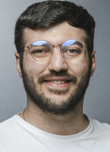 Hassan H. Fakih joined the Khvorova Lab as a postdoctoral associate at UMass Chan Medical School in 2022 and was recently promoted to Junior Faculty in 2026. Currently, his research focuses on enhancing the extra-hepatic delivery of siRNA therapeutics. He employs self-assembled nucleic acid particles and lipophilic conjugation strategies to precisely control protein binding and manipulate siRNA pharmacokinetics/pharmacodynamics. Ultimately, Fakih aims to develop effective siRNA-based therapeutics for skeletal and cardiac muscle diseases. Fakih grew up in Lebanon, where he received his BS in premedical chemistry from American University of Beirut. He then pursued his Ph.D. in chemistry and chemical biology at McGill University, working under the supervision of Hanadi Sleiman. His doctoral research centered on designing and optimizing DNA nanocarriers for nucleic acid therapeutics, aiming to accelerate their clinical translation. Fakih is also a board member of the Oligotherapeutics Society, where he leads the society's mentorship program along with other community activities and planning of the annual meeting.