
Beyond GalNAc: Reengineering siRNA For Extrahepatic Delivery
A conversation with Hassan H. Fakih, Junior Faculty, UMass Chan Medical School
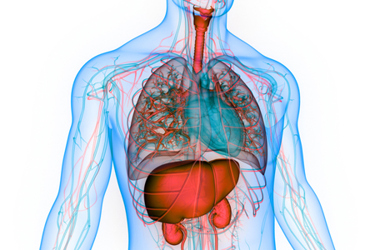
For more than a decade, GalNAc conjugates have transformed liver-targeted siRNA therapeutics, helping establish RNA interference as a clinically validated modality. Yet extending siRNA beyond the liver has proven far more challenging. In Part 1 of our conversation with Hassan H. Fakih, Ph.D., we discuss why effective extrahepatic delivery remains one of the field's biggest obstacles, what current approaches still lack, and how chemical engineering may provide a new path forward.
GalNAc has fundamentally changed liver-directed siRNA therapeutics. Why has achieving reliable delivery beyond the liver remained such a difficult problem?
FAKIH: I wouldn't frame this as an unsolved problem as of 2026 — we've made real progress — but it's certainly not been an easy feat, and it's worth explaining why.
GalNAc succeeded because it hit three things simultaneously: it's chemically simple and scalable to manufacture, it has a wide therapeutic index, and it's extremely specific — not just to the liver but to a single cell type within it, the hepatocyte. That combination of scalability, safety, and precision is what makes a delivery strategy a "golden ticket." It's genuinely rare.
It also helped that the liver was already the path of least resistance. Most injected oligonucleotides end up there by default — it's the body's sink for anything that survives renal filtration. So, getting sufficient quantities of oligo to the liver was never really the hard part. What GalNAc actually solved was efficiency at the cellular level: ensuring the payload didn't just arrive but was taken up and processed productively by hepatocytes specifically.
Move beyond the liver, and you reset the problem to square one — with the added disadvantage that liver and kidney clearance together consume roughly 40% of any injected dose before it goes anywhere else. So now you need enough of the remaining fraction to reach a specific extrahepatic tissue in therapeutically meaningful amounts, while competing against every other off-target tissue also grabbing a share.
So beyond-liver delivery hasn't remained intractable, but it also hasn't produced a single universal answer the way GalNAc did for the liver. Instead, each tissue (muscle, heart, CNS, lung) is getting there through its own bespoke chemistry, and we're still looking for that same trifecta — scalable, safe, and specific — outside the liver.
Many researchers think of delivery primarily in terms of targeting ligands. Your work suggests chemistry itself can influence biodistribution. How did you arrive at that way of thinking?
FAKIH: That came from applying a lesson small molecule drug delivery had already taught us, rather than following the field's default path.
Targeting ligands — antibodies, peptides, aptamers — give exceptional selectivity, but almost all of that work is biologics-based, which brings real costs: complex conjugation chemistry, manufacturing at scale, immunogenicity, and payload fragility during conjugation. We wanted to ask a different question first: Could a purely chemical modification change where an oligo distributes, by working with the body's existing transport machinery rather than engineering a new targeting molecule?
The inspiration was classical pharmacology — small molecules have long exploited binding to circulating plasma proteins, including albumin and lipoproteins, to extend half-life and passively distribute through tissue beds. We reasoned an oligonucleotide could hijack those same carriers the way small molecule drugs do. That led us to lipophilic conjugates: chemically simple, scalable, and tunable — the specific lipid structure influences which circulating carrier it associates with, whether that's albumin or another lipoprotein, and that choice of carrier in turn shapes where the payload ends up in the body.
We've since shown this is a property of the chemistry itself, not of any one payload: Once we optimized a given lipid-conjugated scaffold for one target, swapping in other genes gave comparably strong, durable silencing in the same tissues. So, it wasn't chemistry versus ligand-based targeting — it was chemistry doing some of what a ligand does, at a fraction of the cost, by working with transport systems the body already runs.

Early DCA-siRNA conjugates demonstrated encouraging extrahepatic delivery to tissues such as muscle and heart. What did those studies teach you about both the promise and the limitations of existing conjugate strategies?
FAKIH: We did the early version of DCA-siRNA to muscle and demonstrated its promise in delivery to heart and muscle. However, that work was preliminary, with no optimal chemical design, showing that the silencing is there but modest (needed high doses). We then took the challenge by improving the chemical scaffold of the DCA-siRNA, utilizing new chemical modifications for extra stability, optimizing dosing regimen, and screening for a more potent siRNA sequence. In combination, these all supported the improved efficacy and durability. Other conjugates are promising as well for muscle targeting, especially the biologic-based ones such as antibodies and bicyclic peptides. But a more chemically defined, smaller, simpler lipid conjugate DCA has advantages as well.
One of the themes throughout your work is controlling protein binding instead of accepting whatever interactions naturally occur in circulation. Why do you believe this represents an important shift in siRNA design philosophy?
FAKIH: That's true, and honestly it started as a bit of a serendipitous observation before it became a deliberate philosophy.
In the muscle delivery work, we screened a library of lipid conjugates, and most of them showed broad, promiscuous interactions across multiple lipoprotein classes. Varying lipophilicity changed the extent of binding to different circulating proteins, but the conjugates were still binding several of them simultaneously, with no real selectivity.
When we moved into a separate project focused on tumor delivery, the calculus changed. There, what we actually wanted was selective, strong engagement with a single protein — albumin — because that selectivity was what conferred the property we were after: preferential tumor accumulation, since albumin itself is known to accumulate in tumors via enhanced permeability and retention.
Once we saw how well that worked, it reshaped how we thought about the whole design problem. Broad, unselective protein binding might get an oligo distributed somewhere in the body, but it's a blunt instrument — you're relying on whatever interactions happen to occur, rather than designing for a specific one. Selective, strong binding to a single well-characterized carrier gives you a rational handle: you know which protein is doing the work, you know why it's taking your payload where it's going, and you can engineer the chemistry deliberately around that carrier's own biology rather than treating biodistribution as an emergent, uncontrolled property of lipophilicity.
Looking more broadly, do you think chemically engineering protein interactions could become as important to the future of RNA delivery as ligand engineering has been over the past decade?
FAKIH: I believe so, but with a caveat around selectivity that ligand engineering doesn't face.
Ligands like antibodies or aptamers can hit near-absolute specificity — that's their appeal. Protein interactions driven by lipophilicity are blunter: even as we optimize a lipid to favor one carrier, some off-target binding is likely unavoidable, since we're working within a continuous physicochemical space rather than discrete molecular recognition.
Still, I think there's real room for this to mature. It's already yielded meaningful results in extrahepatic delivery, with the added advantage of chemical simplicity and scalability over ligand engineering. What I'm genuinely unsure about is how large the chemical space actually is — whether there are enough tunable, well-characterized circulating carriers to build a broad platform on, the way GalNAc's biology supported an entire hepatocyte-targeting franchise. That's still an open question.
About The Expert:
 Hassan H. Fakih joined the Khvorova Lab as a postdoctoral associate at UMass Chan Medical School in 2022 and was recently promoted to Junior Faculty in 2026. Currently, his research focuses on enhancing the extra-hepatic delivery of siRNA therapeutics. He employs self-assembled nucleic acid particles and lipophilic conjugation strategies to precisely control protein binding and manipulate siRNA pharmacokinetics/pharmacodynamics. Ultimately, Fakih aims to develop effective siRNA-based therapeutics for skeletal and cardiac muscle diseases. Fakih grew up in Lebanon, where he received his BS in premedical chemistry from American University of Beirut. He then pursued his Ph.D. in chemistry and chemical biology at McGill University, working under the supervision of Hanadi Sleiman. His doctoral research centered on designing and optimizing DNA nanocarriers for nucleic acid therapeutics, aiming to accelerate their clinical translation. Fakih is also a board member of the Oligotherapeutics Society, where he leads the society's mentorship program along with other community activities and planning of the annual meeting.