
Understanding Therapeutic Oligonucleotide Purification By Anion Exchange Chromatography: From Resin Architecture To Process Productivity
By Mikael Andersson Schönn and Martin Enmark, Bio-Works Technologies
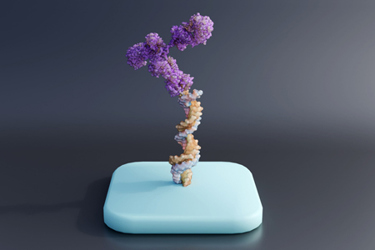
Therapeutic oligonucleotides have emerged as an important class of pharmaceuticals, enabling highly selective modulation of gene expression through mechanisms such as antisense inhibition and RNA interference. As the number of oligonucleotide-based therapeutics entering clinical development continues to increase, so do the demands placed on downstream purification processes. Full-length products must be separated from closely related solid-phase synthesis failure sequences while maintaining high yields, scalability, and process robustness.
Historically, ion-pair reversed-phase chromatography (IP-RPC) and reversed-phase chromatography (RPC) have dominated oligonucleotide purification, particularly at lab scale. These approaches provide excellent resolution but often rely on significant amounts of organic solvents and ion-pairing reagents. As focus shifts toward manufacturing scale, attention has increasingly turned to anion exchange chromatography (AIEX), a technique that exploits the intrinsic negative charge of nucleic acids and can provide excellent results under predominantly aqueous conditions even at scale.
Although AIEX has been used for nucleic acid purification for many years, its successful implementation for therapeutic oligonucleotide workflows depends on understanding several interconnected factors. Resin architecture, oligonucleotide structure, hydrophobic interactions, and chromatographic mechanisms all influence purification performance. Over the past several years, a series of studies at Bio-Works has provided insights into how these factors govern separation efficiency and process productivity.
Why Resin Architecture Matters
Chromatographic performance is often discussed in terms of operating conditions, gradients, and buffer compositions. However, the foundation of any separation lies in the stationary phase itself.
As with all target modalities, the pore size and pore size distribution of a porous resin are particularly important. Matching pore size to molecule size is critical for maximizing binding capacity. While proteins often require large pores to access internal binding sites, short oligonucleotides benefit from smaller pores that provide a greater total interaction area. A narrow pore size distribution promotes more uniform diffusion into and out of the resin particles, reducing peak broadening and improving resolution.
These relationships become especially important when moving from early method development toward practical preparative purification. Analytical experiments can reveal selectivity, impurity patterns, and useful operating conditions, but preparative performance must be demonstrated under relevant loading and residence time. High binding capacities are only useful if they can be achieved without sacrificing resolution, while high selectivity is of limited value if it cannot be maintained at practical process scales. The balance between bead size, pore accessibility, and mass transport ultimately determines whether a resin can support both purification performance and process productivity.
Lessons From Phosphodiester Oligonucleotides
The first step in gaining greater understanding regarding AIEX performance was to examine relatively straightforward phosphodiester DNA oligonucleotides. Although these molecules lack many of the modifications found in therapeutic candidates, they provide a useful model for investigating general chromatographic principles of oligonucleotides and how full-length products can be separated from synthesis-related impurities.
Our experiments demonstrated that in a high-pH buffer system under aqueous conditions, AIEX can effectively resolve a full-length 20-mer oligonucleotide from closely related n-1 and other failure sequences while maintaining substantial loading capacities.
As in most preparative chromatographic processes, increasing purity generally requires collecting a narrower portion of the elution peak, sacrificing yield. Theoretical pooling based on fraction analysis proved valuable for identifying suitable collection windows, particularly since small purity gains near the purity plateau can come at a disproportionate cost in recovery. Slight increases in total purity can also be observed at preparative loadings due to displacement effects allowing clearer separation.
With this knowledge in hand, we expanded our endeavors into more complicated target molecules.
What RNA Teaches Us About Molecular Behavior
While DNA oligonucleotides provide a useful starting point, therapeutic RNA molecules introduce additional complexity. RNA is inherently less stable under alkaline conditions, limiting the use of high-pH operating environments commonly employed for DNA purification. Furthermore, RNA molecules can adopt solution conformations that influence how they interact with chromatographic media.
Studies on a 45-nucleotide synthetic RNA provided several insights. One of the most interesting observations was that the RNA behaved hydrodynamically as a significantly larger molecule than its sequence length would suggest. Measurements of pore accessibility indicated that only a portion of the available pore volume was effectively utilized at low residence times under ambient conditions.
Temperature proved to be a vital variable. Elevated temperatures increased pore accessibility and improved dynamic binding capacity, suggesting that molecular conformation and solution behavior were influencing access to the internal resin structure. In effect, the chromatographic behavior of the RNA was governed not only by its molecular weight or sequence length but also by how the molecule occupied space in solution.
Interestingly, a resin with a smaller pore size still outperformed one with a larger pore size regarding both selectivity and capacity under both ambient and modified conditions, with the effect being especially pronounced at elevated temperature and prolonged residence time.
The lessons learned from RNA purification also provided useful context for understanding a much more challenging class of molecules: phosphorothioate oligonucleotides.

Why Phosphorothioates Behave Differently
Many therapeutic oligonucleotides contain phosphorothioate (PS) modifications, in which a non-bridging oxygen atom in the phosphate backbone is replaced by sulfur. These modifications improve biological stability and resistance to nuclease degradation, making them highly attractive for therapeutic applications.
From a purification perspective, however, phosphorothioates present significant challenges. The sulfur substitution increases molecular hydrophobicity while simultaneously introducing stereochemical complexity. Each phosphorothioate linkage creates a chiral center, generating large numbers of stereoisomers within a single product population. The result is often substantial peak broadening compared with unmodified phosphodiester oligonucleotides.
Systematic investigations into PS oligonucleotide purification revealed that ionic interactions alone cannot explain the observed chromatographic behavior. Instead, secondary interactions play a major role. Hydrophobic interactions, self-association, and transient molecular complexes contribute significantly to peak broadening and reduced separation efficiency.
Several strategies were found to mitigate these effects. Organic modifiers such as acetonitrile improved solubility and reduced hydrophobic interactions, while chaotropic salts influenced retention and peak shape by disrupting intermolecular associations. With careful optimization, selectivity comparable to phosphodiester oligonucleotides can be achieved, although often at the expense of process sustainability and yield. As molecular complexity increases, the likelihood of requiring orthogonal purification approaches to achieve the final purity target also increases.
More broadly, these studies demonstrated that oligonucleotide purification becomes increasingly governed by molecular behavior as chemical complexity increases.
From Chromatographic Behavior To Process Productivity
While individual studies provided insights into specific oligonucleotide classes, a broader question remained: why do AIEX and IPC often perform differently under preparative conditions?
Recent work comparing the two approaches provides some additional mechanistic explanation. Although both techniques can achieve high purities, they generate fundamentally different peak shapes. IPC typically produces classical Langmuirian peak shapes characterized by a sharp front and disperse tail. In contrast, AIEX often exhibits anti-Langmuirian behavior, resulting in disperse fronts and sharp tails.
At first glance this distinction may appear largely academic. However, peak shape directly influences the relationship between purity and yield. In preparative chromatography, product collection windows must be chosen to balance recovery against impurity removal. The location of impurities relative to the yield optimum therefore becomes critically important.
In the studied system, the anti-Langmuirian behavior observed in AIEX shifts this balance in a favorable direction. Because impurity and product distributions overlap differently than in IPC, less peak shaving is required to achieve stringent purity targets. As a result, higher recoveries can often be maintained while meeting demanding specifications.
These chromatographic differences also translate into measurable process-level benefits. Productivity improvements become increasingly apparent as purity requirements become more stringent. Solvent consumption is also reduced, both because AIEX relies primarily on aqueous mobile phases and because fewer purification cycles are required to process the same amount of material.
Rather than simply comparing two chromatographic techniques, these observations help explain why they behave differently under preparative conditions. Understanding those differences makes it easier to predict where AIEX is likely to offer the greatest advantages and where IPC may remain the more appropriate choice.
Translating Understanding Into Practical Workflows
During our studies of both targets and systems, we also came across additional uses and challenges.
AIEX can also address practical issues beyond impurity removal. One example is the removal of residual ion-pairing reagents following IPC purification. By immobilizing oligonucleotides on the AIEX resin, the associated counter-ions can be exchanged directly on-column by washing with a low ionic strength buffer containing the desired replacement ion. This provides a convenient means of preparing the product for formulation without requiring more time-consuming procedures.
Another practical consideration is instrumentation availability. Studies demonstrated that agarose-based AIEX columns can be operated successfully on conventional HPLC systems while maintaining acceptable pressure limits, enabling method evaluation using existing laboratory infrastructure. This reduces barriers to adoption and facilitates comparison with established chromatographic workflows.
Looking Forward
The continued growth of therapeutic oligonucleotides is driving increased interest in purification technologies that can combine high performance with scalability and sustainability.
The studies discussed here illustrate that successful oligonucleotide purification depends on far more than selecting an appropriate gradient or buffer system. Resin architecture, molecular conformation, and chemical modifications all influence chromatographic behavior and strongly influence purification performance and process productivity.
As therapeutic oligonucleotides continue to diversify, a deeper mechanistic understanding of these relationships will become increasingly important. The challenge is not simply to purify nucleic acids but to understand why particular purification strategies succeed and how that knowledge can be used to develop more efficient and sustainable manufacturing processes.
Reference
Enmark M, Unoson C, Leśko M, Stålberg O, Stavenhagen K, Jora M, et al. A comparative study of ion exchange vs. ion pair chromatography for preparative separation of oligonucleotides. J Chromatogr A. 2025;1746:465790. https://doi.org/10.1016/j.chroma.2025.465790
About The Authors
 Mikael Andersson Schönn is a senior application scientist at Bio-Works with over a decade of experience in developing and scaling chromatographic processes. He has worked extensively on purification methods for proteins, peptides, oligonucleotides, and viruses, with a focus on translating laboratory-scale solutions into robust, high-yield, and cost-efficient processes for larger-scale applications. At Bio-Works, Schönn has played a key role in designing workflows that balance efficiency with product quality, supporting both research and industrial needs. His expertise lies in bridging the gap between method development and process implementation, ensuring that chromatographic solutions are both practical and scalable.
 Martin Enmark is a senior application scientist at Bio-Works with more than 15 years of experience in analytical and preparative chromatography. His work has covered a broad range of separation challenges, from small molecules and natural products to biomolecules, with particular expertise in ion exchange, reversed-phase, ion-pair reversed-phase, and supercritical fluid chromatography. Before joining Bio-Works, Enmark worked extensively with therapeutic oligonucleotides, including antisense oligonucleotides and siRNA, focusing on analytical characterization, impurity profiling, and preparative purification using techniques such as IP-RPLC and IEX. At Bio-Works, his current work is centered on application development for chromatographic resins, with a particular focus on peptide purification, including GLP-1-related molecules. Enmark’s expertise lies in applying mechanistic chromatographic understanding to interpret complex separation behavior and translate experimental data into practical purification strategies.