
Overcoming Lung Tumor Barriers: Nanoparticle Delivery Strategies For Pulmonary Cancers
By Faisal Mohammad Shamim Khan, University of South Florida
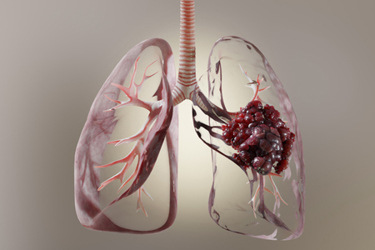
Lung cancer ranks among the most commonly diagnosed cancers globally, remaining the top cause of cancer-related mortality, with approximately 2 million new cases and 1.79 million deaths reported each year.1 Decreased consumption of tobacco has played a big role in reducing lung cancer rates and enhancing survival in developed countries.2 Current chemotherapies often fail to achieve adequate drug concentration within a tumor due to fast clearance and lack of targeting, which leads to inadequate therapeutic outcomes and severe adverse effects.3
Lung Tumor Microenvironment Challenges
Solid tumors in the lung are complex ecosystems of malignant cells intertwined with vessels, immune cells, fibroblasts, and extracellular matrix. The tumor microenvironment (TME) creates multiple barriers to drug delivery because of:
- Dense tumor stroma: Many lung tumors (especially certain non-small cell lung cancer [NSCLC] subtypes) develop dense stromal layers. These layers increase the tumor internal pressure, compress blood vessels, and block chemotherapeutic drugs from penetrating deeply into the tumor tissues.4
- Tumor hypoxia: Lung tumors contain hypoxic regions due to abnormal blood vessels and rapid cell growth.5 Hypoxia can hinder the effectiveness of radiation6 and chemotherapeutic drugs such as platinum agents7 and anthracyclines.8
- Acidic TME: The acidic environment of the tumor is caused by anaerobic metabolism. Many anticancer drugs are weak bases such as anthracyclines, anthraquinones, and vinca alkaloids. In an acidic environment, these drugs become protonated and trapped outside of the tumor cells, resulting in reduced cell permeability.9
These tumors consist of genetically, metabolically, and phenotypically diverse cells that are distributed across regions with varying oxygenation, pH, and vascular access – all conditions that lead to heterogeneous drug delivery.10 On the cellular level, there are differing metabolic states, membrane transporters, endocytic capacities, and drug efflux mechanisms that modulate intracellular drug accumulation. Together, spatial heterogeneity and inconsistent cellular uptake result in incomplete tumor killing, development of drug resistance, and deficient anticancer drug response.11
Nanoparticles And Lung Tumors: Overcoming Delivery Barriers
There are several nanoparticle platforms that have been explored as potential therapeutics for lung cancer. Each offers distinct advantages, while presenting their own delivery challenges.
- Lipid based nanocarriers: Liposomes are tiny vesicles with a phospholipid bilayer that encapsulate drugs. Liposomal formulation improves drug solubility and acts as protection from degradation in circulation.12 In NSCLC, liposomal doxorubicin has shown benefit both in vitro and in vivo.13 Previously established therapeutic lipid nanoparticles (LNPs) have been targeted to lung tissue by modifying surface chemistry or lipid composition.14 Lipid nanocarriers, if carefully formulated, can easily be nebulized for local pulmonary drug delivery.
- Polymeric nanoparticles: Biodegradable polymeric nanoparticles such as poly (lactic-co-glycolic acid) (PLGA), polylactic acid (PLA), or polycaprolactone can be loaded with drugs and allow for controlled or sustained release. These characteristics result in prolonged drug action against tumors.15,16 Furthermore, the surface of solid nanospheres is easily functionalized with targeting ligands.17 Polymeric nanoparticles have been successful in preclinical stages by concentrating drug in lung tumors and extending the drug half-life.18 In terms of administration to the lungs, the polymeric nanocarriers have been adapted into inhalation forms, which ensure the therapy reaches deep in the airways.
- Dendrimers: Dendrimers are highly branched, tree-like polymers that form nanometer size spheres.19 The numerous surface branches can be functionalized with drugs or targeting molecules, enabling multivalent interactions with cancer cells.20 Cationic dendrimers have been successful in delivering MicroRNA-34a to NSCLC. 21
- Inorganic nanoparticles: Metallic nanoparticles such as gold nanoparticles, iron oxide nanoparticles, and silica nanoshells tend to accumulate in tumors, an attribute of the enhanced permeability and retention (EPR) effect, due to their size.22 In lung tumor treatment, inorganic nanoparticles coupled with radiotherapy23 or phototherapy offer effective treatment for pulmonary cancer.24
- Exosomes: Exosomes are naturally occurring extracellular vesicles approximately sized 30 nm to 150 nm. They possess an endogenous lipid bilayer enriched with CD9, CD63, and CD81, which enables immune escape, prolonged circulation, and efficient interaction with lung tissue.25 Their small size and membrane deformability allow access to dense extracellular matrices and the hypoxic tumor core. The vesicles accumulate in tumor tissue via capillary entrapment and intrinsic surface adhesion.26 Exosomes can be loaded with chemotherapeutic agents such as nucleic acids or immunomodulators that directly attack cancer cells or reprogram the TME.27 Exosomes represent a uniquely adaptable and biologically compatible platform that aligns with the complex TME of lung solid tumors.
- Albumin nanoparticles: Albumin is an endogenous protein that lung tumor cells uptake via glycoprotein 60 (gp60) or secreted protein acidic and rich in cysteine (SPARC).28 Albumin nanoparticles loaded with chemotherapeutic agents can be internalized by lung tumor cells via caveolae-mediated transport. They are then degraded in lysosomes, triggering intracellular drug release inside tumor cells.29 Albumin nanoparticles occupy a unique position between biologics and nanomedicines, combining endogenous safety, tumor cell uptake, and formulation flexibility.
Future Directions
Several nanoparticle therapies for lung tumors have reached clinical trials and approval. These developments indicate that regulators and industry are increasingly accepting nanotechnology as a delivery route for lung cancer treatment.
Advances in computational design and AI are enabling nanoparticles to be tailored to suit patients’ needs and treatment. Machine learning models can predict which nanoparticle properties best overcome certain TMEs.30 Stimuli responsive nanocarriers that respond to lung tumor signals, such as mitochondrial processing peptidase (MPP) enzymes, which can cleave signal sequences from mitochondrial proteins, and redox conditions, are likely to increase the efficiency of treatment and minimizing off target toxicity. Such precision design will help stay ahead of tumor adaptation and drug resistance.31

Conclusion
The persistent challenge in lung cancer treatment is the inability to deliver drugs through a hostile TME. Nanoparticle drug delivery systems address these obstacles by enabling controlled biodistribution, tumor responsive release, and improved cellular uptake. Advances across lipid, polymeric, inorganic, and biologically derived nanoparticles demonstrate that delivery of chemotherapeutic drugs can be engineered to align with lung tumor biology. As nanomedicine research progresses, the integration of TME targeting in design, AI optimization, and scalable manufacturing will be important for clinical and commercial success. For manufacturers, early investment in delivery innovation is critical to translating promising drug delivery systems into meaningful outcomes for lung tumor patients.
References:
- World Health Organization. Global Cancer Observatory: cancer today. 2022 [cited 2025 07/26/2025]; Available from: https://gco.iarc.fr/today/en
- Howlader, N., et al., The Effect of Advances in Lung-Cancer Treatment on Population Mortality. New England Journal of Medicine, 2020. 383(7): p. 640-649.
- Yi, M., Li, Y., Jie, H., & Deng, S. (2025). Nanotechnology-Driven Drug Delivery Systems for Lung Cancer: Computational Advances and Clinical Perspectives. Thoracic cancer, 16(14), e70134. https://doi.org/10.1111/1759-7714.70134
- Arandhara, A., Bhuyan, P., & Das, B. K. (2025). Exploring lung cancer microenvironment: pathways and nanoparticle-based therapies. Discover oncology, 16(1), 159. https://doi.org/10.1007/s12672-025-01902-y
- Muz, B., de la Puente, P., Azab, F., & Azab, A. K. (2015). The role of hypoxia in cancer progression, angiogenesis, metastasis, and resistance to therapy. Hypoxia (Auckland, N.Z.), 3, 83–92. https://doi.org/10.2147/HP.S93413
- Sørensen, B. S., & Horsman, M. R. (2020). Tumor Hypoxia: Impact on Radiation Therapy and Molecular Pathways. Frontiers in oncology, 10, 562. https://doi.org/10.3389/fonc.2020.00562
- Emami Nejad, A., Najafgholian, S., Rostami, A., Sistani, A., Shojaeifar, S., Esparvarinha, M., Nedaeinia, R., Haghjooy Javanmard, S., Taherian, M., Ahmadlou, M., Salehi, R., Sadeghi, B., & Manian, M. (2021). The role of hypoxia in the tumor microenvironment and development of cancer stem cell: a novel approach to developing treatment. Cancer cell international, 21(1), 62. https://doi.org/10.1186/s12935-020-01719-5
- Walsh, J. C., Lebedev, A., Aten, E., Madsen, K., Marciano, L., & Kolb, H. C. (2014). The clinical importance of assessing tumor hypoxia: relationship of tumor hypoxia to prognosis and therapeutic opportunities. Antioxidants & redox signaling, 21(10), 1516–1554. https://doi.org/10.1089/ars.2013.5378
- Dumas, J. F., Brisson, L., Chevalier, S., Mahéo, K., Fromont, G., Moussata, D., Besson, P., & Roger, S. (2017). Metabolic reprogramming in cancer cells, consequences on pH and tumour progression: Integrated therapeutic perspectives with dietary lipids as adjuvant to anticancer treatment. Seminars in cancer biology, 43, 90–110. https://doi.org/10.1016/j.semcancer.2017.03.004
- Denison, T. A., & Bae, Y. H. (2012). Tumor heterogeneity and its implication for drug delivery. Journal of controlled release: official journal of the Controlled Release Society, 164(2), 187–191. https://doi.org/10.1016/j.jconrel.2012.04.014
- Fu, F., Nowak, M. A., & Bonhoeffer, S. (2015). Spatial heterogeneity in drug concentrations can facilitate the emergence of resistance to cancer therapy. PLoS computational biology, 11(3), e1004142. https://doi.org/10.1371/journal.pcbi.1004142
- Senjab, R.M, AlSawaftah, N, Abuwatfa, W.H., Husseini, G.A. (2024). Advances in liposomal nanotechnology: from concept to clinics. Royal Society of Chemistry, 1, 928-948. https://doi.org/10.1039/D4PM00176A
- Redruello-Guerrero, P., Córdoba-Peláez, P., Láinez-Ramos-Bossini, A. J., Rivera-Izquierdo, M., Mesas, C., Ortiz, R., Prados, J., & Perazzoli, G. (2024). Liposomal Doxorubicin In vitro and In vivo Assays in Non-small Cell Lung Cancer: A Systematic Review. Current drug delivery, 21(10), 1346–1361. https://doi.org/10.2174/0115672018272162231116093143
- Guo, Y., Wang, L., Lv, P., & Zhang, P. (2015). Transferrin-conjugated doxorubicin-loaded lipid-coated nanoparticles for the targeting and therapy of lung cancer. Oncology letters, 9(3), 1065–1072. https://doi.org/10.3892/ol.2014.2840
- Liu, B., Zhou, H., Tan, L., Siu, K. T. H., & Guan, X. Y. (2024). Exploring treatment options in cancer: Tumor treatment strategies. Signal transduction and targeted therapy, 9(1), 175. https://doi.org/10.1038/s41392-024-01856-7
- Wang, Z., Xiao, M., Guo, F., Yan, Y., Tian, H., Zhang, Q., Ren, S., & Yang, L. (2023). Biodegradable polyester-based nano drug delivery system in cancer chemotherapy: a review of recent progress (2021-2023). Frontiers in bioengineering and biotechnology, 11, 1295323. https://doi.org/10.3389/fbioe.2023.1295323
- Wang, A. Z., Gu, F., Zhang, L., Chan, J. M., Radovic-Moreno, A., Shaikh, M. R., & Farokhzad, O. C. (2008). Biofunctionalized targeted nanoparticles for therapeutic applications. Expert opinion on biological therapy, 8(8), 1063–1070. https://doi.org/10.1517/14712598.8.8.1063
- Liu, Y., Cheng, W., Xin, H. et al (2023). Nanoparticles advanced from preclinical studies to clinical trials for lung cancer therapy. Cancer Nano 14, 28 (2023). https://doi.org/10.1186/s12645-023-00174-x
- Wang, J., Li, B., Qiu, L. et al (2022). Dendrimer-based drug delivery systems: history, challenges, and latest developments. J Biol Eng 16, 18 (2022). https://doi.org/10.1186/s13036-022-00298-5
- Mehta, P., Kadam, S., Pawar, A., Bothiraja, C (2019). Dendrimers for pulmonary delivery: current perspectives and future challenges. New Journal of Chemistry 43, 8396-8409. https://doi.org/10.1039/C9NJ01591D
- Wang, H., Zhao, X., Guo, C., Ren, D., Zhao, Y., Xiao, W., & Jiao, W. (2015). Aptamer-Dendrimer Bioconjugates for Targeted Delivery of miR-34a Expressing Plasmid and Antitumor Effects in Non-Small Cell Lung Cancer Cells. PloS one, 10(9), e0139136. https://doi.org/10.1371/journal.pone.0139136
- Luther, D. C., Huang, R., Jeon, T., Zhang, X., Lee, Y. W., Nagaraj, H., & Rotello, V. M. (2020). Delivery of drugs, proteins, and nucleic acids using inorganic nanoparticles. Advanced drug delivery reviews, 156, 188–213. https://doi.org/10.1016/j.addr.2020.06.020
- Mi, Y., Shao, Z., Vang, J., Kaidar-Person, O., & Wang, A. Z. (2016). Application of nanotechnology to cancer radiotherapy. Cancer nanotechnology, 7(1), 11. https://doi.org/10.1186/s12645-016-0024-7
- Guinart, A., Perry, H. L., Wilton-Ely, J. D. E. T., & Tetley, T. D. (2020). Gold nanomaterials in the management of lung cancer. Emerging topics in life sciences, 4(6), 627–643. https://doi.org/10.1042/ETLS20200332
- Xiao, Q., Tan, M., Yan, G. et al. Revolutionizing lung cancer treatment: harnessing exosomes as early diagnostic biomarkers, therapeutics and nano-delivery platforms. J Nanobiotechnol 23, 232 (2025). https://doi.org/10.1186/s12951-025-03306-0
- Mu, Y., Yang, M., Liu, J., Yao, Y., Sun, H., & Zhuang, J. (2025). Exosomes in hypoxia: generation, secretion, and physiological roles in cancer progression. Frontiers in immunology, 16, 1537313. https://doi.org/10.3389/fimmu.2025.1537313
- Zhang, Z., Dombroski, J. A., & King, M. R. (2019). Engineering of Exosomes to Target Cancer Metastasis. Cellular and molecular bioengineering, 13(1), 1–16. https://doi.org/10.1007/s12195-019-00607-x
- Rahmat, J.N., Liu, J., Chen, Taili. et al (2024). Engineered biological nanoparticles as nanotherapeutics for tumor immunomodulation. Royal Society of Chemistry, 53, 5862-5903. https://doi.org/10.1039/D3CS00602F
- Larsen, M. T., Kuhlmann, M., Hvam, M. L., & Howard, K. A. (2016). Albumin-based drug delivery: harnessing nature to cure disease. Molecular and cellular therapies, 4, 3. https://doi.org/10.1186/s40591-016-0048-8
- Wang, Q., Liu, Y., Li, C., Xu, B., Xu, S., & Liu, B. (2025). Machine Learning-Enhanced Nanoparticle Design for Precision Cancer Drug Delivery. Advanced science (Weinheim, Baden-Wurttemberg, Germany), 12(30), e03138. https://doi.org/10.1002/advs.202503138
- Doroudian, M., Azhdari, M. H., Goodarzi, N., O'Sullivan, D., & Donnelly, S. C. (2021). Smart Nanotherapeutics and Lung Cancer. Pharmaceutics, 13(11), 1972. https://doi.org/10.3390/pharmaceutics13111972
About The Author:
 Faisal Mohammad Shamim Khan is a pharmaceutical scientist and pharmacovigilance specialist whose work spans drug safety, nanoformulation, and translational research. He brings over seven years of global pharmacovigilance experience, alongside hands-on expertise in lipid nanoparticles, albumin-based systems, and polymeric nanocarriers. His background integrates regulatory precision with formulation science and cell-based research. Currently contributing to neurodegeneration studies at the University of South Florida Health Byrd Alzheimer’s Institute, he focuses on generating high-quality, decision-ready data to support therapeutic innovation and ensure safe, effective advancement of treatments from laboratory development to clinical impact.