
Nanosystems And Rare Diseases: Opportunities And Limitations
By Nihat Kurt, Ph.D., Tokat Gaziosmanpaşa University
Rare diseases are defined by the FDA as conditions affecting fewer than 200,000 people in the U.S., while the EMA defines them as diseases with a prevalence of no more than five in 10,000 individuals. Although each rare disease is uncommon, their collective burden is substantial, with more than 10,000 rare diseases affecting the lives of approximately one in every 10 people in the U.S., one in every 12 people in the EU, and over 300 million people worldwide. Approximately 80% of rare diseases have a genetic origin, with nearly 70% of these conditions emerging during childhood, and around 30% of affected children do not survive beyond age 5.1
The Challenges Of Drug Delivery In Rare Diseases
Classical treatment approaches for rare diseases primarily aim to correct metabolic imbalances or mitigate the effects of accumulated unwanted substances. Some classical approaches include:
- enzyme replacement therapy
- chaperone therapy
- substrate reduction therapy
- hematopoietic stem cell transplantation
- various symptomatic and palliative care.
While these approaches can be lifesaving, they confront formidable biological, technical, and financial obstacles that limit their efficacy and accessibility.2
These obstacles are multifaceted and interconnected. Biological barriers prevent medicines from reaching target sites, especially the blood-brain barrier (BBB), which causes trouble for rare neurological diseases. Immune responses and antibody development can neutralize therapeutic proteins, reducing efficacy over time. Short half-lives necessitate frequent administration, imposing substantial burdens on patients and healthcare systems.
Additional challenges include adverse side effects, incomplete understanding of disease pathophysiology, lack of appropriate models, difficulties in recruiting patients for clinical trials, and prohibitive costs.2 Consequently, while conventional therapies have provided relief for some patients, they often fail to adequately address rare diseases etiology. Drug developers in rare disease fields face the difficulty of overcoming barriers to the target site and managing the immune response. Due to these obstacles, about 95% of rare diseases currently lack approved treatment.1
Compounding these challenges are economic disincentives. Pharmaceutical products developed to treat rare diseases are called orphan drugs, as they were neglected or “orphaned” by pharmaceutical companies because of the limited patient population. These drugs offer insufficient economic returns compared to other products developed for more common diseases. This dynamic is exemplified by alipogene tiparvovec, or Glybera, which received marketing authorization in 2012 for adult patients with familial lipoprotein lipase deficiency and severe or recurrent pancreatitis despite dietary fat interventions. Glybera was withdrawn in 2017 when the manufacturer declined to seek renewal due to lack of demand.3 This prime example highlights the urgent need for both greater awareness and progress in this field.
Regulatory Advances
The journey of nanomaterial drug delivery systems as an alternative to traditional treatments began early in preclinical research; clinical translation is hallmarked with the FDA’s approval of the first nanomedicine, Doxil, in 1995.4 This paradigm shift has proven valuable for rare diseases, as evidenced by continued development and subsequent FDA approvals of:
- Rapamune, a sirolimus nanocrystal formulation, for sporadic lymphangioleiomyomatosis (2015)5
- Rebinyn, a glycopegylated recombinant coagulation Factor IX, for hemophilia B (2017)6
- Onpattro, a lipid nanoparticle-based RNA interference, targeting hereditary transthyretin amyloidosis (2018)7
- Elzonris, a CD123-directed cytotoxin, for blastic plasmacytoid dendritic cell neoplasm (2018).8
Despite the maturation of the nanotechnology field, regulatory definitions remain in flux. The FDA published guidance titled Drug Products, Including Biological Products, that Contain Nanomaterials Guidance for Industry in 2022 but has not yet established a regulatory definition for “nanotechnology,” “nanomaterial,” “nanoscale,” or other related terms. The absence of harmonized, definitive regulatory boundaries, such as those established for conventional dosage forms, reflects the complexity and diversity of nanomaterials. Worldwide, there is no uniform definition for nanomaterials. For example:
- FDA may consider the application of nanotechnology: a material or end product is engineered to have at least one dimension within 1 nm to 100 nm, or when it exhibits physical, chemical, or biological properties attributable to its dimensions, even if the dimensions extend up to 1,000 nm.
- EMA defines nanomaterials more restrictively as materials in which at least 50% of the particle size distribution falls within the 1 nm to 100 nm range.
Consequently, both the FDA and EMA recommend a case-by-case review and evaluation approach for nano drug delivery systems, acknowledging that standardized criteria may not adequately capture the nuances of these technologies.
Reshaping The Therapeutic Landscape
The manipulation of materials at the nanoscale has substantially improved drug products and vaccine development, enabling researchers to engineer delivery systems with increased precision and versatility. These nanosystems possess several remarkable capabilities that address fundamental challenges in rare diseases such as:
- overcoming biological barriers such as the BBB, enabling therapeutic access to desired sites
- protecting sensitive molecules such as nucleic acids, mRNA, from enzymatic degradation, preserving therapeutic activity
- specific delivery of materials to targeted tissues through passive and active targeting strategies
- sustaining therapeutic effects over extended periods, reducing dosing frequency.

These systems significantly reduce adverse effects and enhance the pharmacokinetic profiles of drugs.9 By harnessing these properties, nanosystems are reshaping the therapeutic landscape for complex chronic conditions associated with rare diseases.
Based on their composition, nanosystems can be divided into two categories: organic (lipid-based, polymeric, biomimetic) or inorganic (gold, silver, iron oxide, silica) nanoparticles; each offers distinct advantages for specific applications. Organic nanosystems represent the most developed class of drug delivery, primarily due to their biocompatibility and versatility.
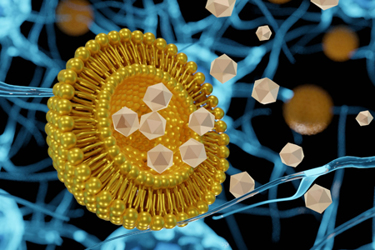
Lipid-based nanosystems have established themselves as the gold standard for delivering fragile biological molecules such as mRNA and siRNA, with recent well-known developments such as mRNA vaccines. These systems protect cargo from enzymatic degradation and facilitate endosomal escape, a critical step for intracellular action.10
Polymeric nanosystems provide alternative platforms, particularly for the delivery of hydrophobic drugs. Utilizing amphiphilic block copolymers, poorly soluble active pharmaceutical ingredients (APIs) can be encapsulated within hydrophobic cores while maintaining hydrophilic exteriors for systemic circulation. These systems offer controlled release and high stability and can be engineered with stimuli-responsive properties, such as pH and enzymatic responsiveness.11
Biomimetic nanosystems represent a frontier, leveraging biological components such as exosomes, platelets, or cell membranes derived from red blood cells. By doing so, they achieve safe immune passage and exploit natural cellular tropism for targeted tissue delivery, thereby reducing immunogenicity.12 Inorganic nanosystems offer unique functionalities including magnetic targeting, photothermal therapy, and catalytic activity.13
Manufacturing Challenges
Despite their advances, nanosystems face substantial obstacles that temper expectations for widespread application in rare disease therapeutics. One of the greatest challenges is bridging the gap between laboratory discoveries and commercial manufacturing while managing considerably higher economic costs compared to conventional formulations.
Nanosystems are highly sensitive to various process parameters, including particle size, polydispersity index, encapsulation efficiency, and stability, which are influenced by complex interactions among flow dynamics, mixing intensity, and material ratios.14 Formulations demonstrating promise in benchtop systems can behave drastically different when scaled to manufacturing volumes in industry.15 The nonlinear nature of many nanosystems means that formulations optimized at the research scale may not perform as expected at commercial production in bigger volumes,16 leading to costly reformulations, substantial time delays, and the potential failure to translate promising candidates into viable drug products.17
This scalability challenge might be more problematic where patient populations are too small to justify investment in large manufacturing. Nevertheless, even for ultra-rare diseases (1:50,000), manufacturing processes must still meet rigorous regulatory standards and quality expectations, thereby creating a contradiction between economic feasibility and regulatory requirements. These obstacles significantly hinder the development and commercialization of nanomedicines. To address these obstacles, the pharmaceutical industry is increasingly focusing on process automation and continuous manufacturing technologies that offer more consistent, scalable production approaches.18
Success And Future Directions
The nanomedicine market is rapidly expanding, with an increasing pipeline of promising clinical candidates and approvals, demonstrating advantages over conventional formulations. Currently, the majority of marketed nanomedicines target oncological indications; however, a significant shift toward rare diseases appears imminent.
This therapeutic area holds substantial potential, particularly given nanosystems’ capacity for targeted delivery through surface modifications and their compatibility with personalized medicine approaches. Nevertheless, it is critical to recognize that nanosystems are not a catch-all solution. Not all rare diseases benefit from nanosystems strategies, as some conditions present biological challenges that even advanced nanosystems cannot overcome. Moreover, nanosystems do not inherently guarantee safety, batch-to-batch uniformity, or in vivo efficacy; each formulation requires rigorous evaluation.
The substantially higher costs associated with nanosystems development and manufacturing compared to traditional methods pose barriers to patient access, particularly in developing countries where many rare disease patients reside, yet healthcare resources are limited. This economic reality creates troubling disparities wherein the patients who might benefit most from advanced therapeutics are least likely to access them.
The path forward requires continued innovation in manufacturing strategies to reduce production costs and careful patient centered evaluation of when nanosystems offer meaningful advantages over conventional approaches.
References
- Health, T. L. G. (2024). The landscape for rare diseases in 2024. The Lancet. Global health, 12(3), e341.
- Beraza-Millor, M., Rodriguez-Castejon, J., del Pozo-Rodriguez, A., Rodriguez-Gascon, A., & Solinís, M. Á. (2024). Systematic Review of Genetic Substrate Reduction Therapy in Lysosomal Storage Diseases: Opportunities, Challenges and Delivery Systems: M. Beraza-Millor et al. BioDrugs, 38(5), 657-680.
- Glybera | European Medicines Agency (EMA) https://www.ema.europa.eu/en/medicines/human/EPAR/glybera, accessed March 15, 2026
- Barenholz, Y. C. (2012). Doxil®—The first FDA-approved nano-drug: Lessons learned. Journal of controlled release, 160(2), 117-134.
- Haeri, A., Osouli, M., Bayat, F., Alavi, S., & Dadashzadeh, S. (2018). Nanomedicine approaches for sirolimus delivery: a review of pharmaceutical properties and preclinical studies. Artificial cells, nanomedicine, and biotechnology, 46(sup1), 1-14.
- Rebinyn | U.S. Food and Drug Administration (FDA)
https://www.fda.gov/vaccines-blood-biologics/approved-blood-products/rebinyn, accessed March 15, 2026 - Yonezawa, S., Koide, H., & Asai, T. (2020). Recent advances in siRNA delivery mediated by lipid-based nanoparticles. Advanced drug delivery reviews, 154, 64-78.
- Zhang, N., Wei, M. Y., & Ma, Q. (2019). Nanomedicines: A potential treatment for blood disorder diseases. Frontiers in bioengineering and biotechnology, 7, 369.
- Kuskov, A. N., Kukovyakina, E. V., & Krasnoselskaya, E. N. (2025). Nanotechnology-Based Drug Delivery Systems. Pharmaceutics, 17(7), 817. https://doi.org/10.3390/pharmaceutics17070817
- Burroughs, L., & Burgess, D. J. (2025). How could the affordable, reliable and continuous production of lipid nanoparticles revolutionize healthcare?. Nanomedicine, 20(15), 1829-1833.
- Civril, E., Sanyal, R., & Sanyal, A. (2026). Engineering polymeric micelles for targeted drug delivery:“click” chemistry enabled bioconjugation strategies and emerging applications. Journal of Materials Chemistry B.
- Gao, L., Wang, J., & Bi, Y. (2025). Nanotechnology for neurodegenerative diseases: recent progress in brain-targeted delivery, stimuli-responsive platforms, and organelle-specific therapeutics. International Journal of Nanomedicine, 11015-11044.
- Unnikrishnan, G., Joy, A., Megha, M., Kolanthai, E., & Senthilkumar, M. (2023). Exploration of inorganic nanoparticles for revolutionary drug delivery applications: a critical review. Discover nano, 18(1), 157.
- Abstiens, K., & Goepferich, A. M. (2019). Microfluidic manufacturing improves polydispersity of multicomponent polymeric nanoparticles. Journal of Drug Delivery Science and Technology, 49, 433-439.
- Mahmud, M. M., Pandey, N., Winkles, J. A., Woodworth, G. F., & Kim, A. J. (2024). Toward the scale-up production of polymeric nanotherapeutics for cancer clinical trials. Nano Today, 56, 102314.
- Bell, I. R., Ives, J. A., & Wayne, B. J. (2014). Nonlinear effects of nanoparticles: biological variability from hormetic doses, small particle sizes, and dynamic adaptive interactions. Dose-Response, 12(2), dose-response.
- Herdiana, Y., Wathoni, N., Shamsuddin, S., & Muchtaridi, M. (2022). Scale-up polymeric-based nanoparticles drug delivery systems: Development and challenges. OpenNano, 7, 100048.
- Zhang, X., Chan, H. W., Shao, Z., Wang, Q., Chow, S., & Chow, S. F. (2025). Navigating translational research in nanomedicine: A strategic guide to formulation and manufacturing. International Journal of Pharmaceutics, 671, 125202.
About The Author:
 Nihat Kurt, Ph.D., is head of the Pharmaceutical Technology Department at the Faculty of Pharmacy, Tokat Gaziosmanpaşa University. As an emerging scientist in the field, Dr. Kurt has established a focused research program dedicated to the advancement of drug delivery systems. His areas of expertise encompass overcoming biological barriers via passive and active targeting strategies, with a particular emphasis on the central nervous system and ocular conditions. His academic contributions include several peer-reviewed publications and a nationally registered patent, reflecting his commitment to discovering innovative therapies.