
Engineering Translation: How tRNA Therapeutics Expand The RNA Toolkit
A Q&A With Nerissa Kreher, MD, chief medical officer, Alltrna
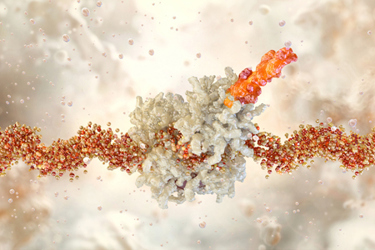
Most RNA therapeutics focus upstream — correcting genes, replacing transcripts, or editing the blueprint itself. But for a significant class of genetic diseases, the instructions are present and intact; failure occurs later, at the ribosome, when translation breaks down and functional protein is never made. In this Advancing RNA Q&A, Nerissa Kreher, MD, chief medical officer at Alltrna, explains why protein translation is emerging as a distinct and clinically actionable therapeutic target. She outlines how engineered targeted RNAs (tRNAs) are designed to correct shared translational failure modes — such as premature stop codons — directly within the cell’s native machinery, and how this mechanism-first approach could reshape precision medicine by treating common biological errors across many rare and ultra-rare diseases.
Translation As A Therapeutic Target
ARNA: Most RNA therapeutics intervene at the gene or transcript level. What does it mean, scientifically, to target protein translation itself as the therapeutic locus?
NK: Targeting translation means intervening at the step where genetic information is converted into functional protein. In many genetic diseases, the DNA is present and the RNA transcript is produced, yet disease occurs because translation breaks down at the ribosome, meaning the message cannot be correctly decoded into a full-length protein.
In stop codon disease, for example, a premature termination codon causes mRNA translation to stop early. Engineered tRNAs are designed to address these errors directly by enabling the ribosome to insert the correct amino acid at a premature stop and continue protein synthesis.
Rather than changing the gene or adding back the RNA that encodes the protein, the tRNA approach focuses on the moment the mutation disrupts translation, allowing the cell to produce a full-length, functional protein using its existing machinery. Because the same translation errors, such as premature termination codons, recur across many genes and diseases, this strategy can be applied wherever that shared translational defect is the underlying cause of disease.
ARNA: How does a translation-centric approach reshape how we think about “precision” in genetic medicine?
NK: Precision does not have to mean “one gene, one drug.” It can also mean “one mechanism, one drug.” From a clinical standpoint, nonsense mutations are a clear, shared failure mode: translation ends prematurely.
That creates a very different way to define precision, not by the disease name on the chart but by what is actually happening in the cell. That shift matters because it opens the door to treating groups of patients who are currently scattered across many rare diagnoses and often ultra-rare diagnoses where clinical development feasibility is challenging but share the same core disease mechanism.
Mechanism & Biology
ARNA: How do engineered suppressor tRNAs enable readthrough of premature stop codons at the ribosome?
NK: A premature stop codon is essentially a false stop sign. The ribosome sees it and shuts down production early, so the protein is truncated or absent. Engineered suppressor tRNAs are designed to recognize that premature stop codon and insert the intended amino acid, allowing translation to continue and produce a full-length protein.
The key point is that this happens within the native translation process. We are not asking the cell to adopt an entirely new mechanism, we are giving it a tool it needs for that specific error.
ARNA: What distinguishes tRNA-based nonsense suppression from earlier small molecule readthrough strategies?
NK: Small molecule readthrough approaches often work by broadly influencing ribosomal fidelity. Clinically, that can create a narrow path between “not enough activity” and “too much global disruption.”
With engineered tRNAs, the intent is much more specific. We are matching a defined codon and leveraging the same fundamental decoding logic the cell already uses. That codon-level specificity is what, in my view, gives this approach a more controlled and clinically workable foundation.
ARNA: How is translational fidelity preserved when introducing engineered tRNAs into the endogenous tRNA pool?
NK: This is one of the first questions we get asked, because translation is not a place where you want unintended consequences. We preserve fidelity through how we design and test the tRNAs and through how we control exposure.
On the design side, we evaluate codon selectivity and correct amino acid incorporation in systems that capture real cellular complexity, not just simplified readouts. On the exposure side, an oligonucleotide-based tRNA therapeutic gives us dose control and the ability to adjust or stop therapy. That matters clinically, because it creates a safety lever we can use.
Scope, Constraints, & Context
ARNA: Nonsense mutations occur across many genes and diseases — are there biological or cellular contexts where this approach may be limited?
NK: Nonsense mutations create a shared, well-defined failure at the level of translation, which is why they are well suited to a tRNA-based approach. That said, the clinical impact of restoring full-length protein can vary depending on factors like tissue biology, protein function, and how much restoration is needed for benefit.
Importantly, those differences don’t change the underlying mechanism, but they do influence how efficacy is measured and interpreted in different settings. Our approach is to anchor development around the shared translational error, while using representative disease contexts to understand thresholds, delivery, and biomarkers, rather than assuming each condition requires an entirely separate validation pathway.
ARNA: How do factors like tissue type, translational demand, or cellular stress influence therapeutic performance?
NK: What’s important to remember is that we’re working within the cell’s natural environment. We are not changing gene regulation or forcing the cell to make more or less RNA. We are correcting a specific decoding error and allowing the gene to be translated under its existing controls. The goal is to restore protein toward its physiologic range rather than override normal biology, even across different tissues.
This framework becomes particularly relevant in what are sometimes described as “Goldilocks” diseases, where both too little and too much protein activity can cause disease. In these settings, a therapeutic strategy aimed at restoring protein toward a physiologic range is well aligned with a tRNA approach that works within the cell’s existing regulatory systems.
ARNA: What level of protein restoration is typically required to achieve functional benefit, and how variable is that threshold across diseases?
NK: It is variable. In some metabolic disorders, relatively modest restoration can move a biomarker substantially and translate into meaningful clinical benefit. In other diseases, you may need higher protein restoration, or you may need protein in a very specific cellular compartment or developmental window.
Clinically, this is why biomarkers and functional readouts are so important. We are not just asking “did we make protein?” we are asking “did we restore enough function to matter?”
Safety & Control
ARNA: What are the key safety considerations when modulating translation, a process fundamental to all cells?
NK: The first principle is control. Translation is essential biology, so safety is tied to specificity, dose, and reversibility. So, I find it helpful to compare categories of risk. Permanent approaches can introduce risks that are difficult to modulate after the fact.
With an oligonucleotide-based tRNA therapeutic, we can control exposure. From a clinical development standpoint, that ability to titrate, pause, or stop is foundational.
ARNA: How is unintended readthrough of native stop codons assessed and mitigated?
NK: We assess this directly, using complementary methods that look at termination behavior and downstream protein products. It’s also worth noting that biology gives us an advantage here: normal termination occurs in a different context than premature termination, and the translation machinery has multiple safeguards to stop at the end of an mRNA.
But we do not rely on theory alone. This question has been evaluated across a broad nonclinical data set, and those data support that engineered tRNAs can be designed to act selectively at premature stop codons while preserving normal termination. These findings inform both candidate selection and ongoing safety monitoring.
ARNA: What is known about the consequences of sustained or repeat dosing in chronic indications?
NK: Repeat dosing is a feature, not a compromise. Many of these are lifelong diseases, and a treatment needs to fit that reality. From a CMO perspective, repeat dosing gives you flexibility; you can optimize over time, adjust for growth or disease trajectory, and respond to emerging safety signals. That flexibility is important when bringing a new modality into human studies.
Relationship To Other RNA Modalities
ARNA: How does tRNA engineering conceptually differ from — or complement — advances in mRNA design, antisense oligonucleotides, or gene editing?
NK: I think of it as a different layer in the information flow. mRNA adds or replaces instructions. ASOs can reduce or modify transcripts. Editing changes the underlying blueprint. Engineered tRNAs influence how existing transcripts are interpreted at the ribosome.
That can be complementary. In some cases, the transcript is present and stable, but translation fails. In those cases, acting at translation is not redundant, it’s addressing the actual point of breakdown.
ARNA: In which therapeutic contexts might translation-level intervention be preferable to gene- or transcript-specific strategies?
NK: The clearest context is nonsense mutations, where the gene exists but the correct protein does not. Another context is when you want to restore endogenous regulation and localization rather than introduce an exogenous gene product.
Clinically, we also think about feasibility. Some genes are large, some tissues are difficult to deliver to, and some diseases have narrow therapeutic windows. Translation-level intervention can offer a practical option when other strategies face constraints.
Translational & Clinical Implications
ARNA: What biomarkers are most informative for evaluating success beyond protein expression alone?
NK: For me, the best biomarkers are the ones that connect mechanisms to relevant disease-modifying functions. In metabolic diseases, that often means well-established biochemical readouts (metabolites, pathway intermediates) that have a known relationship to disease severity. A good example of this is phenylalanine, a biomarker that is well recognized and even a regulatory endpoint for the disease phenylketonuria.
We also look for evidence that the protein is functional, correctly localized, and producing the expected downstream effect. The goal is to build a chain of evidence, not a single data point.
ARNA: Could translation-focused therapies change how genetic diseases are grouped or prioritized in clinical development?
NK: Yes, and that is one of the most interesting clinical implications. If you group patients by a shared failure mode, such as premature stop codons, you can potentially design trials and evidence packages that are more scalable for rare and ultra rare disease.
That does not eliminate disease level nuance, but it changes the starting point. It’s a move from “what is the diagnosis called” to “what is the common mechanism we can address.”
Looking Ahead
ARNA: Beyond nonsense mutations, what other translational defects could be addressable using similar principles?
NK: Beyond nonsense mutations, the same translational intervention approach could potentially be applied to certain frameshift and missense mutations. Initial research has shown that tRNAs can be designed to restore the reading frame in specific frameshift settings, or to insert the wildtype amino acid at a missense codon.1
For us, nonsense suppression is a great first entry point because the causal mechanism is direct and the therapeutic goal is clear: restore full-length protein synthesis where translation stops too early. That clarity makes it the right place to start, while informing how the platform could be extended to other translational defects.
ARNA: What open biological questions around tRNA therapeutics are most critical for advancing this modality?
NK: From a clinical perspective, the most important questions are about exposure and predictability. As this is a new modality, we need to understand how tRNA therapeutics behave in humans, including pharmacokinetics, durability, and how those factors inform dosing over time.
Another key area is tissue expansion. We are starting in the liver, where delivery and monitoring are well understood, but advancing the modality means learning how tRNA therapeutics function in other tissues.
Ultimately, we want to show this approach can move beyond a single tissue and become a broadly applicable therapeutic for all stop codon disease patients.
References:
About The Expert:
 Nerissa Kreher, MD, is chief medical officer (CMO) at Alltrna, bringing decades of experience in rare disease drug development across clinical development, medical affairs, and regulatory strategy. She is an accomplished physician executive and board-certified pediatric endocrinologist with a distinguished career spanning both private and public biotechnology companies. Kreher has played a central role in advancing and commercializing therapies across multiple rare disease areas, including neuromuscular, metabolic, and lysosomal storage disorders.
Prior to joining Alltrna, Kreher served as chief medical officer at Entrada Therapeutics, where she led clinical and regulatory strategy, medical affairs, and patient advocacy. She previously held CMO roles at Tiburio Therapeutics and AVROBIO, overseeing clinical development for multiple gene therapy programs. Earlier in her career, she served as global head of clinical and medical affairs at Zafgen and held senior roles at Shire and Enobia Pharma, including contributing to Alexion’s acquisition of Enobia.