
Dual Centrifugation And The Next Phase Of Lipid Nanoparticle Development
By Valentin Bender, postdoctoral scientist, University of Freiburg
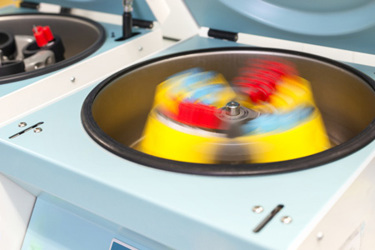
Lipid nanoparticles (LNPs) are now foundational to RNA therapeutics. Whether we are discussing siRNA, mRNA vaccines, gene silencing approaches, or emerging CRISPR-based systems, the ability to formulate RNA into stable, functional nanoparticles has become a core enabling capability for the field.
Yet despite how central LNPs are to RNA medicine, the tools we use to develop and screen formulations have not evolved as rapidly as the modalities themselves.
This realization is what inspired me and my team’s recent work at the University of Freiburg exploring dual centrifugation (DC) as an alternative formulation strategy. Our goal was not to challenge the importance of microfluidic mixing systems (MMS) — which remain essential for scalable production — but to ask a more specific question: Can we make early-stage LNP development faster, more flexible, and more resource-efficient without sacrificing quality or performance?
Why Formulation Needs Rethinking
The RNA therapeutic landscape has expanded dramatically over the past decade. What began with a relatively focused pipeline of siRNA programs now includes:
- mRNA vaccines
- personalized cancer vaccines
- rare disease therapies
- in vivo gene editing strategies.
This diversification has changed what we need from formulation tools.
Modern RNA programs increasingly require:
- rapid screening of lipid compositions, particularly ionizable lipids
- minimal material consumption, especially when working with novel lipids or expensive RNA constructs
- flexible batch sizes in the milligram range
- gentle processing conditions that protect RNA integrity.
Microfluidic systems are highly reproducible and powerful once a formulation is defined. But in exploratory phases, where dozens of variables are tested, they can be slow and material-intensive.
How Dual Centrifugation Works And Why It’s Different
Dual centrifugation operates by rotating sample vials simultaneously around two axes. This creates constantly shifting centrifugal forces that drive bead-mediated homogenization inside sealed vials.
The process produces a vesicular phospholipid gel (VPG) intermediate, which can then be redispersed into uniform nanoparticles through controlled dilution.
Compared to MMS, DC:
- occurs entirely within a closed vial
- avoids continuous solvent streams and tubing
- uses moderate shear rather than turbulent mixing
- accommodates highly concentrated lipid systems.
From a scientific standpoint, this creates a different formulation environment — one that is particularly well suited to small-batch experimentation.
The Challenge: Can DC Be Reliably Downscaled?
Previous studies demonstrated that dual centrifugation could produce functional LNPs at ~10 mg lipid scales. But many early-stage research settings operate at far smaller quantities. The question we asked was whether DC could be successfully downscaled to 1 mg batches while preserving control over:
- particle size
- polydispersity
- encapsulation efficiency
- biological performance.
Downscaling is not trivial. At very small scales, surface effects, bead interactions, and dead volumes become disproportionately influential. Assumptions that hold at larger volumes no longer apply.
To address this systematically, we evaluated several key parameters:
- vial size
- bead diameter and quantity
- lipid concentration during homogenization
- homogenization time.
One of the more surprising findings was that larger beads (1.5 mm) performed better at the 1 mg scale than smaller beads. Smaller beads increased lipid adhesion and material loss, while larger beads improved energy transfer and mixing efficiency.
Similarly, 2 mL vials outperformed smaller formats, likely because their geometry allowed longer bead travel paths and improved mixing dynamics.
Lipid concentration was also critical. We found that 15% lipid content represented an optimal balance between efficient gel formation and manageable viscosity.
To ensure robustness rather than anecdotal optimization, we applied a Box–Behnken design of experiment approach. This allowed us to model interactions between parameters and define a reliable operating window.
Under optimized conditions, we consistently achieved:
- particle sizes around 130 nm to 150 nm
- polydispersity indices below 0.2
- high reproducibility across batches.
Equally important, the system was not hypersensitive; small deviations did not lead to dramatic performance losses.
Validation With Cationic LNP Systems
We first validated the optimized protocol using cationic DOTAP-based formulations, which serve as a useful benchmark.
At the 1 mg scale, cationic miRNA-loaded LNPs produced via DC:
- matched or exceeded the uniformity of larger-scale preparations
- achieved near-complete RNA encapsulation
- demonstrated strong gene knockdown in cell-based assays.
Importantly, we did not observe increased cytotoxicity attributable to the DC process itself.
These findings reassured us that downscaling did not compromise functional outcomes.
Ionizable Lipids: The Real Test
Ionizable lipids underpin the success of modern LNP therapeutics, but they introduce additional complexity. In microfluidic systems, lipid protonation is typically achieved using acidic aqueous buffers during mixing.
This approach does not translate directly to DC.
Our solution was to protonate ionizable lipids during lipid film preparation by adding a controlled amount of hydrochloric acid to the ethanolic lipid solution. After solvent evaporation, the protonated lipid species remain embedded in the dry film.
This eliminated the need for highly acidic buffers during homogenization and enabled successful DC-based formulation of ionizable LNPs.
Using lipids such as DODMA, SM-102, and ALC-0315, we observed:
- particle sizes are predominantly below 200 nm
- near-neutral surface charge
- high encapsulation efficiencies, especially for SM-102 and DODMA.
As expected, helper lipid selection influenced biological performance. DOPE-containing formulations consistently outperformed DSPC-containing systems in both knockdown and mRNA expression assays.
This was encouraging, as it demonstrated that DC preserved meaningful structure–function relationships rather than masking them.
RNA Integrity Under Mechanical Stress
A frequent concern with alternative processing methods is RNA degradation. Dual centrifugation involves bead collisions and centrifugal forces, which could theoretically damage long mRNA constructs.
Our data suggest this concern is manageable. mRNA-loaded LNPs produced via DC:
- retained strong GFP expression in cell assays
- showed only minor integrity loss on agarose gels
- performed comparably to MMS-produced formulations.
This reinforces that DC represents a moderate-shear process compatible with RNA payloads.
What This Means For The Field
The broader implication of this work is not that dual centrifugation should replace microfluidic systems. Rather, it offers a complementary tool particularly powerful during early-stage formulation screening.
In practical terms, DC enables:
- rapid parallel testing of lipid libraries
- significant material savings
- flexible batch sizes suitable for exploratory research
- simplified workflows within sealed vials.
As RNA therapeutics diversify and timelines shorten, the ability to iterate quickly at small scale becomes increasingly valuable.
Through our research, we view dual centrifugation as a bridge connecting benchtop hypothesis testing with more formalized manufacturing workflows.
Looking Forward
There are still open questions. Long-term stability, in vivo performance comparisons, and regulatory considerations all warrant further exploration.
What is clear: innovation in RNA therapeutics is not only about new lipid chemistries or new RNA constructs. It is also about improving the tools and processes that allow us to discover and refine those systems.
If we want to accelerate RNA medicine, we must examine not just what we are building but how we are building it.
Dual centrifugation is one example of that reexamination. It represents a meaningful step toward more flexible, efficient, and experimentally empowering LNP development.
This article is a summary of “Dual centrifugation – a novel perspective on lipid nanoparticle formulation development.” The full paper, authored by Valentin Bender, Leon Fuchs, Monika Köll-Weber, Jan Lembeck, Laurine Kaul, Regine Süss and Ulrich Massing, can be read here.
About The Author:
 Valentin Bender studied pharmacy at the University of Regensburg from 2015 to 2020. During his practical year, he gained industry experience at Boehringer Ingelheim in Biberach an der Riß, focusing on liposomal formulations, and worked in a community pharmacy at the E-Center in Tübingen. Since February 2022, Bender has been a Ph.D. student in the group of Prof. Dr. Suess at the Chair of Pharmaceutical Technology, University of Freiburg. His research project focuses on developing RNA-based formulations for cardiovascular disease, combining pharmaceutical technology with cutting-edge RNA therapeutics. Bender’s work also involves formulation design, optimization, and evaluation of RNA delivery systems, contributing to the broader field of RNA therapeutics and cardiovascular medicine. His academic and professional trajectory reflects a strong foundation in both pharmacy practice and pharmaceutical research, bridging laboratory innovation with clinical applications.