
Can Engineering The Passenger Strand Improve siRNA Performance?
By David R. Tabatadze, Ph.D., President and CEO, ZATA Pharmaceuticals, Inc.
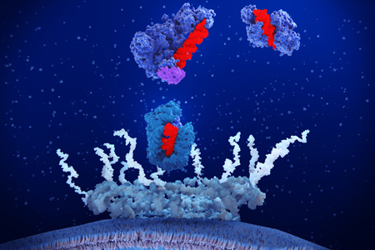
An siRNA therapeutic must accomplish more than bind its intended RNA target. After entering a cell, its guide strand must be loaded into the RNA-induced silencing complex (RISC), while the passenger strand must be discarded. When that selection is inefficient, less guide strand may be available for the intended activity, and passenger strand loading may contribute to unintended gene silencing.
This creates a design challenge: How can we make the passenger strand easier to reject while keeping the siRNA duplex sufficiently stable before it reaches the machinery that activates it?
A Different Role For The Passenger Strand
Much of siRNA development has focused on sequence selection, chemical stabilization, and delivery. These remain essential. At ZATA Pharmaceuticals, we are investigating whether the architecture and backbone chemistry of the passenger strand offer another way to improve performance.
Passenger strand segmentation is not a new concept. Earlier researchers showed that an siRNA with an intact guide strand and a segmented passenger strand could remain functional and reduce unintended passenger strand activity. They also used LNA modifications to improve the stability of their segmented constructs. That work demonstrated the potential of the architecture while underscoring the need to balance stability with passenger strand release.
Our approach, Electrostatically Compensated Segmented Passenger-Strand siRNA (ECSP-siRNA), explores a different way to manage that balance. We keep the guide strand intact and introduce a deliberate discontinuity into the passenger strand. Near that discontinuity, we place backbone-modifying groups developed through ZATA’s patent-protected chemistry platform. These groups are designed to provide localized electrostatic compensation.
We hypothesize that this combination can help maintain useful duplex stability before RISC loading while permitting efficient passenger strand release during RISC maturation. The intended result is greater guide strand retention and less opportunity for passenger strand-mediated off-target activity. Whether ECSP-siRNA achieves those results, and how it compares with other stabilized segmented designs, requires direct testing.
Testing The Mechanism
The central question is whether this architecture changes strand selection. Our proposed studies will measure guide and passenger strand loading into Ago2-containing complexes, compare target gene silencing with appropriate siRNA controls, and assess whether reduced passenger strand loading corresponds to lower off-target activity.
We will also examine how the modifications affect duplex properties and cellular behavior. A promising result would require more than strong knockdown of one target: the platform must show that any improvement in potency is accompanied by preserved specificity and a practical route to synthesis and optimization.
What Makes A Comparison Informative?
For companies evaluating a new siRNA architecture, the choice of comparator is as important as the activity assay. A useful study should hold the guide sequence and delivery conditions constant while comparing a conventional duplex, a segmented passenger strand design, a backbone-modified design, and a design combining segmentation with backbone modification. These comparisons can help distinguish the contribution of each feature and reveal whether they work together.
Strand-specific measurements matter. Target knockdown alone cannot show whether a result reflects improved guide loading, greater cellular uptake, altered stability, or another effect. Measuring both strands in Ago2-containing complexes alongside intracellular exposure and duplex properties can make the result easier to interpret. Testing more than one sequence and cell type can also reveal whether an apparent advantage is broadly useful or depends on a particular target.
Negative results deserve attention, too. A design that improves guide selection but loses too much duplex stability may point toward a different placement or degree of backbone modification. Likewise, stronger knockdown without a corresponding improvement in strand selection would prompt us to examine uptake or other effects. These comparisons can turn an encouraging result into a practical design rule — or show where the approach should be revised.

Exploring Nuclear RNA Targets
We are particularly interested in whether ECSP-siRNAs can expand the range of RNA targets accessible to silencing. Some therapeutically relevant RNAs are predominantly nuclear, where effective siRNA activity can be difficult to achieve. Partial modification of backbone charge may influence intracellular trafficking, but that possibility remains to be tested.
For this reason, nuclear RNA silencing is a distinct objective of our research, not an assumed property of the platform. We aim to determine whether ECSP-siRNAs can silence a nuclear target, how their activity compares with conventional designs, and what the results reveal about intracellular access and mechanism.
From Chemistry To Therapeutic Potential
ZATA’s patent-protected backbone chemistry was developed for incorporation through established solid-phase oligonucleotide synthesis. That gives us a practical starting point for making defined siRNA designs and testing how the position and extent of modification affect their behavior.
The next step is biological validation. We need to learn whether passenger strand segmentation and localized electrostatic compensation work together as proposed — and whether the resulting molecules provide a meaningful advantage in potency, specificity, or access to nuclear RNA targets. Those answers will determine where this design strategy could contribute to future siRNA therapeutics.
We invite groups developing siRNA therapeutics to evaluate this approach in their own programs. Key considerations are to incorporate backbone-modifying monomers into selected siRNA candidates, design matched comparisons, and test guide strand loading, potency, and off-target activity. Such studies would show where ECSP-siRNA offers a practical advantage and help identify the applications best suited to further development.
About The Author:
 David R. Tabatadze, Ph.D., is president and CEO of ZATA Pharmaceuticals, where he leads the development of next-generation oligonucleotide chemistries and nucleic acid therapeutics. Trained under the late Paul Zamecnik, Tabatadze has spent more than two decades advancing innovations in oligonucleotide backbone engineering, antisense technologies, and gene-silencing platforms. His work focuses on developing chemically modified RNA and DNA therapeutics designed to improve stability, cellular uptake, specificity, and therapeutic performance across ASO, siRNA, and gene-editing applications. Prior to joining ZATA, he held scientific leadership and research roles at Hybridon, Viral Inactivation Technologies, and Palomar Medical Technologies. A frequent speaker at industry conferences, including TIDES USA, Tabatadze is recognized for his contributions to the evolution of oligonucleotide chemistry and the future of RNA-based medicines.