
Beyond Chemistry And Delivery: Why Translational Models Are Becoming The Next Frontier In RNA Therapeutics
By Ivan Gladwyn-Ng, Ph.D., Senior Business Development Scientist, Cyagen

Over the past decade, RNA therapeutics have transformed from a promising concept into one of the fastest-growing classes of medicines. Antisense oligonucleotides (ASOs), small interfering RNAs (siRNAs), splice-modulating oligonucleotides, and other RNA-directed technologies have demonstrated that diseases once considered “undruggable” can now be addressed through highly selective modulation of gene expression.
Clinical successes such as inclisiran for hypercholesterolemia, vutrisiran for transthyretin amyloidosis, and nusinersen for spinal muscular atrophy have validated the enormous therapeutic potential of RNA-targeted approaches. Advances in oligonucleotide chemistry, tissue-specific delivery, and manufacturing continue to expand the range of diseases that may become treatable using these modalities.
Despite this remarkable progress, one challenge remains underappreciated during preclinical development. Many RNA therapeutics are designed to recognize human RNA sequences. However, they are frequently evaluated in animal models that express mouse genes with important differences in sequence, transcript architecture, regulatory elements, and RNA processing.
For these gene-targeting modalities, these differences are not simply a technical detail — they can fundamentally influence whether a therapeutic engages its intended target, produces meaningful pharmacodynamic responses, and generates data that can be translated with confidence into the clinic. As RNA therapeutics become increasingly precise, the quality of the preclinical model has become an equally important determinant of translational success.
RNA Therapeutics Introduce New Demands On Preclinical Models
Traditional rodent models have been indispensable for biomedical research, enabling decades of progress in understanding disease biology, pharmacology, and toxicology. They remain essential components of drug development. However, RNA-directed therapeutics present biological requirements that differ from many conventional small molecules or monoclonal antibodies.
Rather than binding proteins, many RNA therapeutics interact directly with RNA transcripts. Their activity often depends on exact nucleotide complementarity and the surrounding genomic architecture. Therapeutic efficacy may rely on specific coding sequences, untranslated regions (UTRs), splice junctions, intronic elements, or endogenous regulatory regions that differ substantially between humans and rodents.
An siRNA designed to silence a human transcript may not effectively target the corresponding mouse transcript. Likewise, an antisense oligonucleotide intended to modify pre-mRNA splicing requires the correct human exon-intron architecture to reproduce its mechanism of action. Even when human and mouse genes encode proteins with similar biological functions, differences in transcript structure can profoundly affect therapeutic activity.
Consequently, one of the central questions in RNA therapeutic development is no longer simply whether a model reproduces a disease phenotype. Increasingly, developers must also ask whether it faithfully reproduces the human molecular target.
Why Genomic Context Matters
For RNA therapeutics, the target extends beyond the protein coding sequence alone. Gene expression is governed by a complex genomic landscape that includes promoters, enhancers, exons, introns, untranslated regions, splice sites, and numerous regulatory elements that collectively determine when, where, and how transcripts are produced. These features influence transcript abundance, alternative splicing, RNA stability, and accessibility to RNA-targeting therapeutics. Because many oligonucleotide therapies act directly on RNA processing rather than protein function, preserving this genomic context can be critical for evaluating therapeutic mechanisms in vivo.
This represents an important distinction from traditional approaches to gene humanization. Replacing only the coding sequence may be sufficient for evaluating certain protein-targeted therapeutics, while transgenic overexpression models can provide valuable biological insights. However, neither approach necessarily recreates the endogenous human transcriptional and regulatory environment required for many RNA-directed medicines.
For developers seeking to evaluate human-specific pharmacology, maintaining the broader genomic architecture may provide a more physiologically relevant platform for studying target engagement and downstream biological responses.
Whole-Genomic Humanization: A Different Approach
Recognizing these challenges, Cyagen developed the HUGO-GT (Humanised Genomic Ortholog) platform to more faithfully reproduce human target biology in vivo.
Enabled by TurboKnockout technology, the platform offers ultra-high precision and the capability to replace large genomic fragments up to 500 kb. This overcomes the limitations of conventional gene editing, ensuring the stability and reliability of the model. Rather than introducing only a human coding sequence, HUGO-GT models replace the endogenous mouse genomic locus with the corresponding human genomic sequence while preserving key genomic features — including promoters, exons, introns, and untranslated regions — that contribute to endogenous gene regulation.
The objective is not simply to express a human protein but to recreate a human genomic environment in which RNA-directed therapeutics can interact with their intended targets under physiologically relevant conditions. This distinction is particularly relevant for therapeutic modalities whose mechanisms depend on transcript architecture, including siRNA-mediated knockdown, antisense-mediated splice modulation, and other RNA-targeted approaches.
For researchers, this offers several practical advantages. First, pharmacodynamic responses can be interpreted within the context of a human target sequence rather than a surrogate mouse transcript. Second, tissue-specific target engagement and downstream biomarker responses can be evaluated within a living organism while maintaining endogenous gene regulation. Finally, humanized genomic models may reduce the risk of advancing therapeutic candidates based on artificial model compatibility rather than biologically relevant human target interactions.

Humanized Genomic Context Supports Diverse RNA Therapeutic Mechanisms
The value of whole-genomic humanization becomes particularly evident when examining therapeutic mechanisms across multiple disease areas. A prime example is our humanized MAPT (B6-Tau) model, which is highly suitable for studying neurodegenerative diseases such as Alzheimer's disease and frontotemporal dementia. In this model, the endogenous mouse MAPT locus has been replaced with its human counterpart, including the 3’ untranslated region. This model supports evaluation of RNA therapeutics targeting tau, a key driver of Alzheimer’s disease and frontotemporal dementia.
Validation studies demonstrated that intracerebroventricular administration of human-specific siRNA drug candidates significantly reduced human MAPT mRNA expression within both the hippocampus and frontal cortex. This data illustrates how preserving human transcript architecture enables precise assessment of target engagement within disease-relevant regions of the central nervous system.
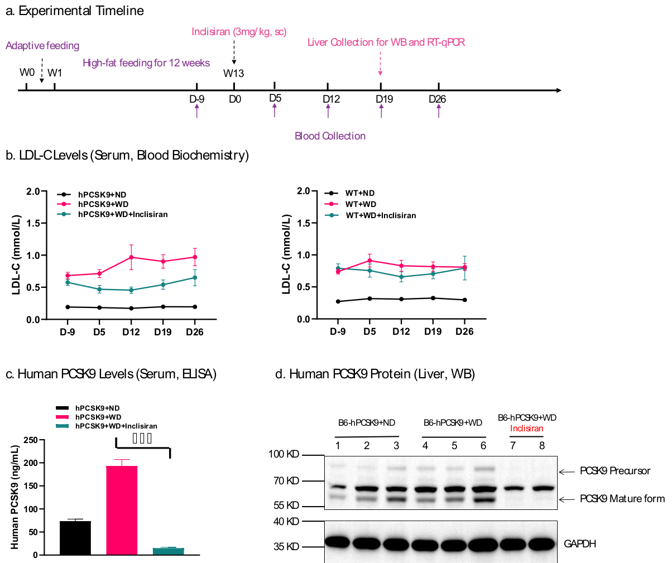
A second example comes from the humanized PCSK9 model (B6-PCSK9), which expresses human PCSK9 protein and serves as a critical tool for studying metabolic disorders such as hypercholesterolemia, atherosclerosis, and coronary heart disease. PCSK9-directed RNA therapeutics have become an important strategy for lowering LDL cholesterol, exemplified clinically by inclisiran, a long-acting RNA interference therapeutic. In our humanized model, a single subcutaneous administration of inclisiran (3 mg/kg) resulted in substantial reductions in circulating human PCSK9 levels and decreased hepatic PCSK9 protein expression. Consequently, this intervention enhanced the liver’s capacity to clear LDL cholesterol, demonstrating not only molecular target engagement but also downstream physiological responses, linking RNA-mediated gene silencing with clinically relevant biomarkers.
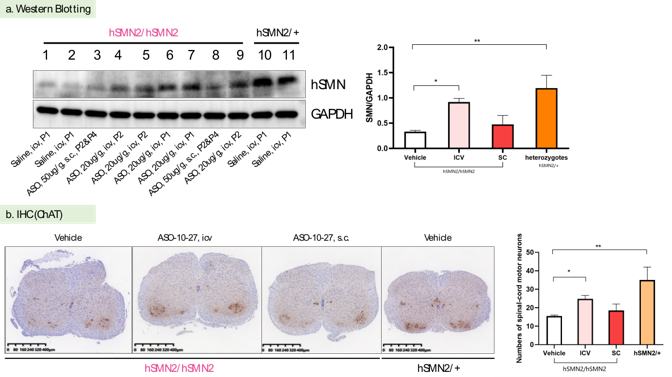
Splice-modulating therapeutics present an even greater requirement for accurate genomic architecture. Spinal muscular atrophy (SMA) arises from insufficient functional SMN protein, and therapies such as nusinersen restore protein expression by modifying SMN2 pre-mRNA splicing. Because this mechanism depends directly on exon-intron organization, reproducing the human splicing substrate becomes essential for meaningful efficacy evaluation.
Cyagen’s humanized SMN2 model (B6-hSMN2) accurately recapitulates typical SMA-like phenotypes. Validation studies utilizing an ASO structurally and functionally similar to the FDA-approved drug Spinraza (nusinersen) demonstrated remarkable efficacy. Treatment increased SMN protein expression, preserved anterior horn motor neurons, and profoundly improved survival rates. While untreated homozygous B6-hSMN2 mice exhibited a median survival of only 29 days, mice treated with the ASO showed significant health improvements, with all treated subjects surviving to at least 140 days of age and displaying delayed tissue lesions.
A fourth example is provided by the humanized TTR model (B6-hTTR), developed for transthyretin amyloidosis (ATTR) research, including ATTR cardiomyopathy (ATTR-CM) and ATTR polyneuropathy (ATTR-PN). Administration of the clinically validated, liver-directed siRNA vutrisiran produced marked reductions in circulating human prealbumin (TTR) protein, thereby minimizing TTR protein deposition in tissues and demonstrating the model's high utility for evaluating RNA interference therapeutics.
Collectively, these studies highlight the versatility of whole-genomic humanization across multiple therapeutic modalities (e.g., siRNA-mediated gene silencing, antisense splice modulation, and RNA knockdown) as well as across neurological, neuromuscular, metabolic, cardiovascular, and rare disease indications.
Integrating Humanized Models Into The Translational Workflow
No single experimental model can answer every question in drug development. Cell-based systems remain invaluable for high-throughput screening, mechanistic studies, and early optimization. Conventional rodent disease models continue to provide critical insights into disease biology, pharmacology, and safety assessment. Rather than replacing these approaches, humanized genomic models complement them by addressing a distinct translational question:
Can a human-specific RNA therapeutic engage its intended target within a physiologically relevant in vivo environment?
Answering that question early in development can improve confidence in pharmacodynamic data, strengthen biological interpretation, and support more informed candidate selection before entering expensive clinical development.
As RNA medicines become increasingly sophisticated, integrating complementary model systems throughout discovery and preclinical development will be essential for reducing translational risk.
The Next Evolution Of RNA Therapeutics
The rapid progress of RNA therapeutics has been driven by innovations in chemistry, delivery technologies, manufacturing, and increasingly sophisticated approaches to target selection. The next stage of progress may depend just as much on advances in translational biology.
As RNA medicines become more precise, preclinical models must evolve to reflect the biology these therapeutics are designed to engage. Human target sequence alone may no longer be sufficient; preserving the surrounding genomic architecture that governs transcript expression and processing is becoming increasingly important for evaluating therapeutic mechanisms with confidence.
Whole genomic humanization represents one approach to addressing this emerging need. By recreating human genomic context within an in vivo system, HUGO-GT models provide researchers with an opportunity to evaluate human-specific RNA therapeutics under conditions that more closely resemble their intended biological setting.
For developers of ASOs, siRNAs, splice-modulating oligonucleotides, and other RNA-directed medicines, the preclinical model is no longer simply a testing platform. Increasingly, it has become an integral component of translational strategy.
As the RNA therapeutics field continues to expand into neurological disorders, cardiometabolic disease, rare genetic disorders, oncology, and beyond, the programs most likely to succeed will be those that align therapeutic design, delivery strategy, and preclinical biology from the earliest stages of development.
In that future, advances in chemistry and delivery will continue to drive innovation. Equally important will be advances in the models that enable researchers to evaluate those innovations with greater confidence before they reach the clinic.
Supporting Documents
Explore Our Complete Humanised Mouse Model Library
Download/View our latest poster presented at TIDES to see how humanized genomic context supports diverse RNA therapeutic mechanisms. Questions? Email inquiry@cyagen.com.
About The Author
 Ivan Gladwyn-Ng, Ph.D., is senior business development scientist at Cyagen. Gladwyn-Ng is an accomplished scientific leader with extensive experience at the intersection of biomedical research and commercial innovation. He earned a doctorate from Monash University’s Australian Regenerative Medicine Institute, following a first-class honors degree in medical bioscience. With a career spanning Europe and Asia, Gladwyn-Ng has led international teams, developed new business territories, and built partnerships with CRO and pharmaceutical organizations. His combination of scientific expertise and commercial strategy support Cyagen’s continued expansion and success across global markets.